



Why Pay More for Quality Parts: Long-Term Value Explained
Table of Contents
- The Real Cost of Cheap Parts
- OEM vs. Aftermarket: Understanding the Difference
- How to Identify High Quality Engine Parts
- Automotive Parts Warranty Explained
- Why Mechanic Markup Exists and What It Covers
- Total Cost of Ownership: Quality vs. Budget Options
- Vehicle Reliability and Unexpected Breakdowns
- Conclusion
Last Updated: August 17, 2026
The Real Cost of Cheap Parts
When a vehicle component fails unexpectedly, the true expense extends far beyond the part itself. A budget engine part might cost significantly less upfront, but replacement labour, vehicle downtime, and potential secondary damage often dwarf that initial saving. Many vehicle owners discover this the hard way, purchasing an inexpensive aftermarket component only to face a breakdown weeks or months later, with replacement labour alone exceeding what they would have spent on a quality part from the beginning.
The real problem isn’t that quality parts cost more. It’s that cheap parts create hidden costs you don’t see until something goes wrong. Precision manufacturing, rigorous quality assurance, and proper fitment all require investment. When a supplier cuts corners to offer rock-bottom pricing, they’re typically reducing one or more of these critical factors.
Cheap aftermarket parts often fail within months, leaving you stranded and facing emergency repair bills that far exceed the original part cost. The false economy of budget components can turn a planned maintenance expense into a crisis.
OEM vs. Aftermarket: Understanding the Difference
Original Equipment Manufacturer (OEM) parts are produced by the same suppliers who built your vehicle’s original components. Aftermarket parts come from third-party manufacturers and vary enormously in quality, fitment precision, and reliability.
OEM parts guarantee exact fitment because they’re engineered to the same specifications as your vehicle’s original equipment. Aftermarket parts range from genuine replacements manufactured to identical standards to budget alternatives that cut corners on material quality or manufacturing precision. A cheap aftermarket fuel pump might fit your engine bay, but if its internal tolerances are loose, it won’t deliver fuel at the correct pressure, leading to poor engine performance or failure.
At Vertexark Auto Parts, we source aftermarket components that meet or exceed OEM specifications. Our commitment to guaranteed exact fit means you’re not gambling on whether a part will work with your specific vehicle model. Quality aftermarket parts offer better value without sacrificing fitment or reliability, while budget aftermarket parts promise savings but deliver headaches.
How to Identify High Quality Engine Parts
Identifying quality engine parts requires understanding what separates precision-engineered components from budget alternatives. Start by examining the manufacturer’s specifications. Quality engine parts come with detailed technical documentation that matches your vehicle’s engineering requirements, including material composition and specifications. Budget parts often omit these details or use inferior materials that fail under normal operating stress.
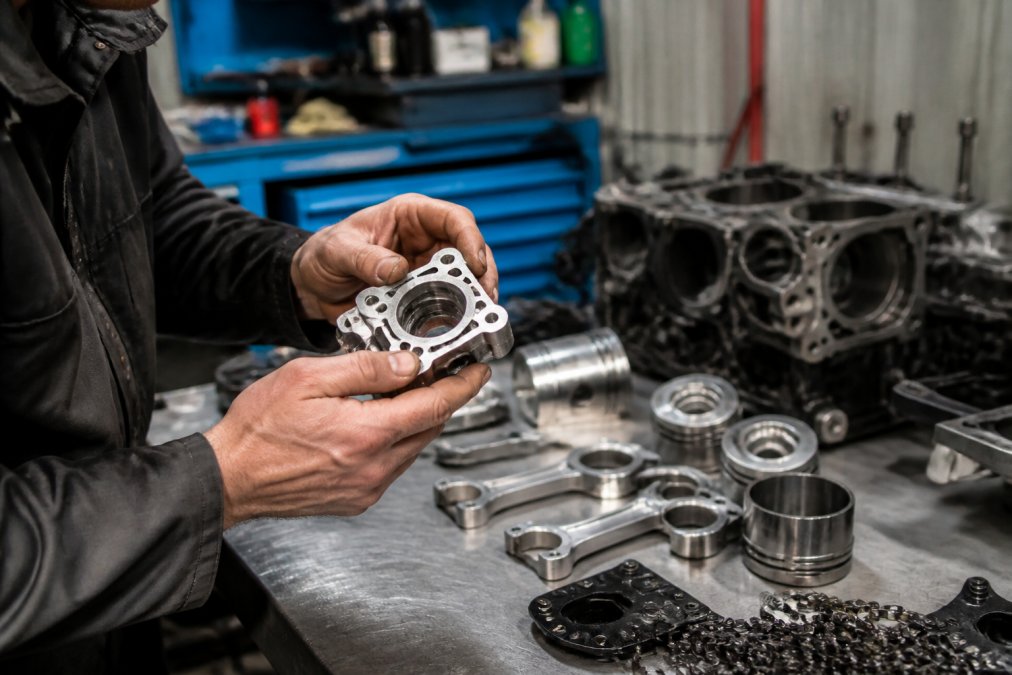
Manufacturing precision shows in visible details. Run your fingers across the component’s surfaces, quality parts have smooth, consistent finishes without rough edges, casting imperfections, or uneven surfaces. These flaws indicate poor quality control during manufacturing. Check for certification marks and industry standards compliance like ISO specifications, which require third-party testing and validation. Budget parts often skip this step entirely.
Material Quality and Manufacturing Standards
The material used in an engine component directly determines its lifespan and reliability. A budget water pump might use a plastic impeller that degrades under heat and coolant chemistry over time, while a quality water pump uses materials specifically selected for thermal and chemical resistance with precision tolerances and quality lubricants.
Manufacturing standards separate quality from budget production. Precision manufacturing requires controlled environments, calibrated equipment, and rigorous inspection protocols. Budget manufacturers often operate with minimal quality control, producing parts quickly at high volumes with minimal testing, resulting in wider variance in component performance.
Fitment Precision and Component Compatibility
Fitment precision determines whether a part works correctly in your vehicle. A replacement thermostat housing that’s off by 2 millimetres might fit physically but sit at an angle inside the engine bay, creating stress on coolant hoses and causing leaks. A quality part is engineered to match your vehicle’s exact specifications, ensuring proper alignment and stress distribution.
An engine part must work harmoniously with surrounding components. A replacement fuel injector must deliver fuel at the correct pressure, spray pattern, and atomisation for your engine’s combustion characteristics. A cheap injector might spray fuel differently, affecting combustion efficiency and creating carbon buildup over time.
When ordering engine parts, verify fitment against your specific vehicle’s year, make, model, and engine code. Even within the same model line, different engine variants require different components. Exact fitment matching prevents installation problems and ensures optimal performance.
Automotive Parts Warranty Explained
A warranty reflects the manufacturer’s confidence in their product’s reliability. Quality aftermarket parts typically come with warranties ranging from one to five years, covering defects in materials and workmanship. Budget parts often come with minimal warranties, sometimes just 30 or 90 days, suggesting limited manufacturer confidence in longevity.
The real value of a warranty is the signal it sends about manufacturing quality. A manufacturer willing to back a component with a five-year warranty has invested in quality materials and precision manufacturing and tested the component extensively. At Vertexark Auto Parts, our industry-leading warranty reflects our commitment to quality parts that last.
Why Mechanic Markup Exists and What It Covers
Mechanic markup covers several real costs. First is technical expertise, a qualified mechanic diagnoses your vehicle’s problem, determines the correct part for your specific model, and ensures compatibility. Second is installation labour and warranty support; the mechanic installs the part, tests the system, and provides warranty coverage for the installation work. Third is accountability, when you purchase from a mechanic, you have recourse if the part fails prematurely.
Overhead costs also factor into mechanic pricing. A professional workshop requires rent, insurance, equipment, training, and staff salaries. Quality mechanics charge fair rates because they invest in proper training, diagnostic equipment, and customer service.
Total Cost of Ownership: Quality vs. Budget Options
Total Cost of Ownership (TCO) calculates the complete expense of owning and maintaining a vehicle component over its useful life. Budget parts have lower upfront costs but higher long-term expenses. A cheap engine component might cost 40% less initially, but if it fails after 18 months, you’re paying for replacement labour, a second replacement part, and vehicle downtime.
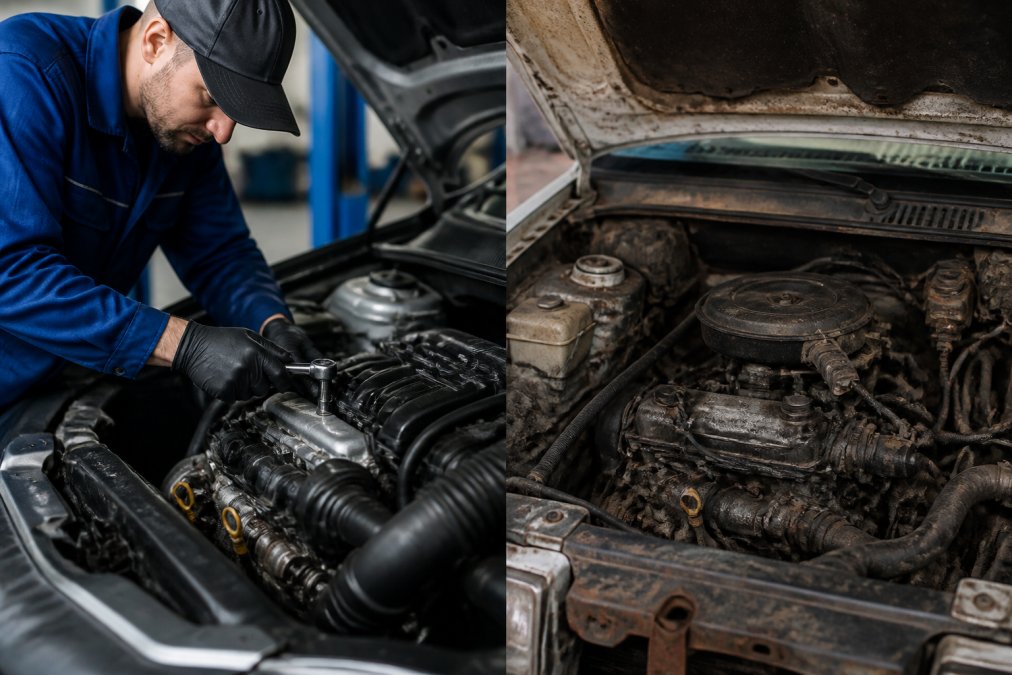
Consider a replacement alternator. A budget version costs less upfront but might fail after two years, requiring labour costs to remove it, purchase another alternator, and install it again. A quality alternator costs more initially but lasts the vehicle’s lifetime, eliminating replacement costs entirely.
| Comparison Factor | Budget Parts | Quality Parts |
|---|---|---|
| Initial Cost | Lower | Higher |
| Expected Lifespan | 1-2 years | 4-7+ years |
| Failure Rate | High | Low |
| Replacement Labour | Multiple times | Once or none |
| Total 5-Year Cost | Often higher | Usually lower |
| Vehicle Reliability | Unpredictable | Consistent |
| Warranty Coverage | Minimal | Comprehensive |
The data consistently shows that quality parts deliver better total cost of ownership. The initial price premium is recovered through reduced repair frequency, longer component lifespan, and lower labour costs over time.
Vehicle Reliability and Unexpected Breakdowns
Vehicle reliability depends directly on component quality. A vehicle built with quality parts and maintained properly rarely experiences unexpected breakdowns. Unexpected breakdowns create cascading problems, a failed fuel pump leaves you stranded, requiring emergency roadside assistance, potentially a tow truck, and urgent repair scheduling.
Safety considerations matter too. Some component failures create safety hazards. A failed brake component, suspension part, or steering element puts you and your passengers at risk. Reliability also affects vehicle value, a vehicle with a history of frequent repairs is worth less when you sell or trade it. A vehicle maintained with quality parts and a clean repair history commands higher resale value.
Quality parts reduce unexpected breakdowns, improve vehicle safety, lower long-term repair costs, and preserve vehicle value. The peace of mind that comes with reliable transportation is worth the initial investment in quality components.
Conclusion
The question of why to pay more for quality parts resolves itself when you examine the complete cost picture. Budget parts promise savings but deliver hidden expenses, unexpected failures, emergency repairs, repeated replacements, and vehicle downtime.
Quality parts represent a smarter financial decision. They last longer, fail less frequently, require less maintenance, and preserve your vehicle’s value. At Vertexark Auto Parts, we’ve built our reputation on providing quality components backed by industry-leading warranties and guaranteed exact fit. When you choose quality parts, you’re choosing reliability, peace of mind, and better long-term value.
When vehicle repairs become necessary, the choice between budget and quality parts directly impacts your costs, safety, and driving experience. Vertexark Auto Parts offers high-quality components engineered for exact fit, backed by industry-leading warranties and fast shipping. With our guaranteed exact fit, easy returns, and 100% customer satisfaction commitment, you can confidently maintain your vehicle with parts designed to last. Visit Vertexark Auto Parts today to find the right components for your vehicle and secure every journey ahead.
Frequently Asked Questions
Are expensive car parts actually better quality?
Yes. Premium quality parts undergo stricter quality assurance processes, use superior materials, and meet higher precision engineering standards. OEM and quality aftermarket parts are manufactured to exact specifications, whereas budget alternatives often use cheaper materials and looser tolerances. This translates to better fitment, longer lifespan, and fewer unexpected component failures. While the upfront cost is higher, the reduction in repair frequency and downtime makes quality parts more cost-effective over the vehicle's lifetime.
What are the risks of buying cheap aftermarket parts?
Cheap aftermarket parts carry significant risks: poor fitment that leads to installation complications, premature failure requiring costly replacements, and potential safety hazards. Budget components often fail within months, creating unexpected breakdowns that strand you without your vehicle. Additionally, cheap parts may not meet Australian safety standards or automotive engineering specifications, putting vehicle reliability at risk. Many budget suppliers offer minimal warranty coverage, leaving you financially exposed if the part fails shortly after purchase.
How does automotive parts warranty explained help me choose parts?
A comprehensive warranty protects your investment and signals manufacturer confidence in product quality. Industry-leading warranties typically cover defects in materials and workmanship for extended periods, offering peace of mind and financial protection. When evaluating parts, check warranty length, what's covered (labour vs. parts only), and whether the supplier honours claims without hassle. Reputable suppliers like Vertexark Auto Parts back their inventory with strong warranty terms because they stand behind their precision manufacturing and quality assurance processes.
Do premium auto parts last longer than budget options?
Significantly longer. Quality parts are built to withstand normal wear cycles and maintain performance specs over extended maintenance intervals. Premium components use better material quality, tighter manufacturing tolerances, and superior engineering, resulting in durability that outlasts budget alternatives by years. Budget parts often experience accelerated component failure due to inferior materials and loose fitment, requiring replacement cycles far shorter than OEM or quality aftermarket equivalents. This extended lifespan directly reduces your long-term repair costs and vehicle downtime.
This article was written using GrandRanker