



How to Choose Reliable Performance Parts: A 2026 Guide
Table of Contents
- Step 1: Verify Vehicle Compatibility and Fitment
- OEM vs Aftermarket Performance Parts: What You Need to Know
- Step 2: Assess Quality Through Customer Feedback and Testing
- Step 3: Identifying Counterfeit Car Parts and Avoiding Fakes
- Step 4: Check Warranty Coverage and Safety Standards
- Febest Replacement Parts for Enthusiasts: A Trusted Option
- Step 5: Evaluate Installation Requirements and Difficulty
- How to Choose Reliable Performance Parts: Your Decision Checklist
Step 1: Verify Vehicle Compatibility and Fitment
The most common mistake when buying performance parts is assuming a part that fits one model will work on another. Vehicle fitment is precise, and a component designed for a 2005 Honda Civic will not fit a 2007 model without modification, even though they’re the same generation. Before you add anything to your cart, you need to verify that the part matches your vehicle’s exact specifications.
Start by gathering your vehicle’s complete identification data. You’ll need the year, make, model, engine size, transmission type, and any specific trim or variant information. This information appears on your vehicle’s registration documents and on the driver’s side door jamb. Some performance parts vary depending on whether your car has an automatic or manual transmission, a naturally aspirated or turbocharged engine, or specific emissions equipment. Missing even one of these details can lead to ordering a part that looks right but won’t install.
Use the manufacturer’s fitment database or vehicle compatibility tool. Most reputable suppliers maintain searchable databases where you enter your vehicle details and the system returns only parts that are confirmed to fit. At Vertexark Auto Parts, our guaranteed exact fit commitment means every part is verified against your specific vehicle before it ships. This eliminates the guesswork and the risk of receiving incompatible components.
Cross-reference your vehicle information against multiple sources if you’re uncertain. Your vehicle’s owner manual contains detailed specifications. The manufacturer’s parts catalogue and technical service bulletins also list compatible components. If you’re ordering from an online retailer, ask their support team directly, legitimate suppliers will confirm fitment before processing your order, not after.
OEM vs Aftermarket Performance Parts: What You Need to Know
Understanding the difference between original equipment manufacturer (OEM) parts and aftermarket components is essential for making informed decisions about reliable performance parts. Each category has distinct advantages and trade-offs, and the right choice depends on your vehicle’s age, your performance goals, and your budget.
OEM Components: Factory Specifications and Reliability
OEM parts are manufactured to the exact specifications the vehicle’s original manufacturer designed and tested. These components meet factory standards for durability, safety, and compatibility. When you install an OEM part, you’re using the same component your vehicle was built with, or an identical replacement from the manufacturer’s approved supplier.
The reliability advantage of OEM components is significant. These parts have been engineered to work with your vehicle’s specific systems, the engine management software, electrical architecture, cooling system, and suspension geometry. They’ve undergone rigorous testing before the vehicle ever reached the market. For older vehicles especially, OEM parts ensure that your restoration or repair maintains the vehicle’s original performance characteristics and handling dynamics.
The trade-off is cost. OEM parts typically carry a premium price because you’re paying for the manufacturer’s engineering, testing, and warranty support. For basic maintenance and repairs, OEM pricing can feel excessive. However, for critical engine components, suspension geometry parts, and safety-related systems, the OEM route often justifies the expense through longevity and reliability.
Aftermarket Parts: Performance Gains and Trade-offs
Aftermarket components are manufactured by third-party suppliers, not the vehicle’s original manufacturer. This category includes everything from budget replacement parts to high-performance upgrades engineered by specialist firms. Aftermarket suppliers often compete on price, but quality varies dramatically across the market.
The performance advantage of quality aftermarket parts is real. Specialist manufacturers design components that improve horsepower, torque delivery, handling response, or weight reduction. An upgraded intake manifold, performance suspension kit, or tuned engine control module can deliver measurable gains in vehicle performance (peer-reviewed research). Enthusiasts often prefer aftermarket parts because they offer customisation options unavailable from the factory.
The challenge is verification. Not all aftermarket parts meet the same engineering standards as OEM components. Some are designed for specific use cases, track driving, off-road use, or mild street performance, and may not suit daily driving. Others are simply poor quality and fail prematurely. This is where customer feedback, performance testing data, and warranty coverage become critical evaluation tools.
Step 2: Assess Quality Through Customer Feedback and Testing
Customer reviews and real-world testing data reveal how a part actually performs after installation. A component might have impressive specifications on paper, but if dozens of users report premature failure, poor fitment, or performance issues, those reviews matter more than marketing claims.
Start by reading detailed customer feedback on the supplier’s website and independent review platforms. Look for patterns in what users report. A single negative review might reflect a user error or an unusual installation scenario. Multiple reviews describing the same problem, fitment issues, durability concerns, or performance shortfalls, indicate a genuine quality issue. Pay attention to reviews from users with similar vehicles and similar usage patterns to yours.
Seek out performance testing data from automotive publications and specialist forums. Many performance-focused publications test aftermarket components and publish detailed results comparing them to OEM baselines or competing products. These tests measure real-world outcomes: horsepower gains, temperature management, durability under stress, and installation difficulty. Testing data is more objective than individual reviews and provides context for the performance claims manufacturers make.
Check the supplier’s testing standards and quality assurance processes. Reputable suppliers conduct performance testing and durability validation before releasing new products. Some publish their testing methodology and results. Others provide technical documentation showing how their components were validated. This transparency indicates confidence in the product’s reliability.
Step 3: Identifying Counterfeit Car Parts and Avoiding Fakes
Counterfeit automotive parts represent a significant risk in the performance parts market (peer-reviewed research). Fake components may look identical to genuine parts but fail prematurely, damage your engine, or create safety hazards. Learning to identify counterfeits protects both your vehicle and your investment.
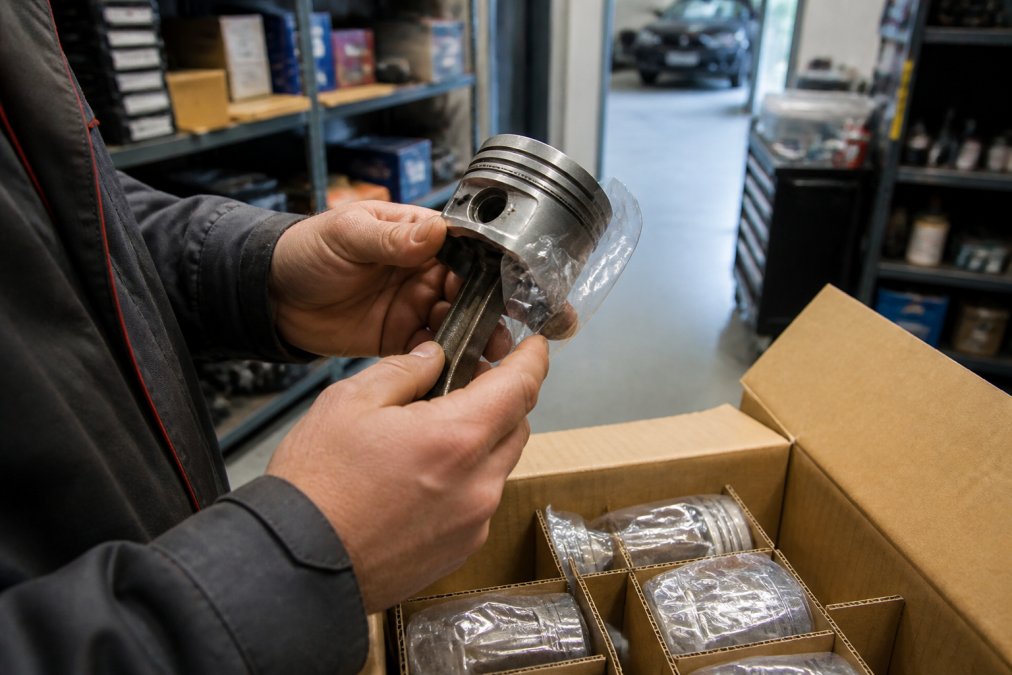
Examine packaging and labelling closely. Genuine parts come in professional packaging with clear printing, consistent branding, and proper labelling. Counterfeit packaging often shows spelling errors, blurry graphics, inconsistent colours, or poor print quality. Check for holographic security labels or tamper-evident seals that legitimate manufacturers use. Inspect serial numbers and batch codes, these should match the supplier’s records when you contact them directly.
Verify the part’s weight and material composition. Counterfeit components sometimes use cheaper materials or lighter construction to reduce manufacturing costs. If a performance part feels unusually light or flimsy compared to product images or descriptions, request the manufacturer’s specifications and compare them. Quality aftermarket manufacturers publish material composition and weight specifications for this reason.
Purchase from authorised distributors and established retailers. Counterfeiters typically operate through unfamiliar online marketplaces, social media channels, or third-party sellers offering suspiciously low prices. Buying directly from the manufacturer or from established retailers with reputation and accountability reduces counterfeiting risk significantly. Vertexark Auto Parts sources all components through verified suppliers and guarantees authenticity.
Request documentation and traceability. Legitimate suppliers can trace parts back through their supply chain. Ask for invoices, batch numbers, and manufacturing dates. If a seller cannot provide this documentation, the part’s origin is questionable. Manufacturer contact information should be verifiable, call the company directly and ask if the part you’re considering is authentic.
Step 4: Check Warranty Coverage and Safety Standards
Warranty terms reveal how confident a manufacturer is in their component’s durability. A performance part backed by a comprehensive warranty indicates the manufacturer stands behind their engineering and quality control. Conversely, parts with minimal or unclear warranty coverage suggest higher failure risk.
Review the warranty scope carefully. Some warranties cover defects in materials and workmanship but exclude failure due to installation, modification, or use outside the manufacturer’s intended application. Others are limited to a specific timeframe, 12 months, 24 months, or mileage-based terms. Understand what the warranty actually covers before you commit to the purchase. A 5-year warranty on a performance intake system is more valuable than a 12-month warranty on the same part.
Verify that the part meets relevant safety and emissions standards for your region. In Australia, vehicle components must comply with Australian Design Rules (ADR) and relevant emission standards. Performance parts that modify engine operation or emissions systems must maintain compliance with these standards. Suppliers should provide documentation showing their components meet applicable regulations. Installing non-compliant parts can affect your vehicle’s roadworthiness and your insurance coverage.
Check whether the part’s installation or use affects your vehicle’s warranty with the manufacturer. Some OEM warranties exclude coverage if you’ve installed aftermarket performance components. Review your vehicle’s warranty documentation before modifying engine systems, suspension, or emissions-related components. Understanding these implications helps you make decisions aligned with your warranty coverage.
Febest Replacement Parts for Enthusiasts: A Trusted Option
Febest has built a reputation as a specialist supplier of performance and replacement components for enthusiasts. Their parts are designed with attention to fitment accuracy and performance reliability, making them a popular choice among DIY mechanics and performance-focused drivers.
Febest components typically offer a balance between OEM reliability and aftermarket performance customisation. Their parts are engineered to meet or exceed factory specifications while offering improved performance characteristics in many cases. For drivers seeking reliable performance parts without the premium pricing of full OEM components, Febest provides a compelling alternative backed by solid warranty coverage and documented testing.
When evaluating Febest parts specifically, follow the same assessment process you’d apply to any aftermarket component: verify fitment for your exact vehicle, review customer feedback from users with similar vehicles, check warranty terms, and confirm the part meets relevant safety standards. Febest’s established market presence and consistent customer feedback make them a lower-risk option compared to unknown suppliers, though individual product quality can vary.
Step 5: Evaluate Installation Requirements and Difficulty
Installation difficulty ranges from simple bolt-on components requiring basic hand tools to complex modifications requiring specialised equipment and technical knowledge. Understanding what’s involved before you buy prevents frustration and costly mistakes.
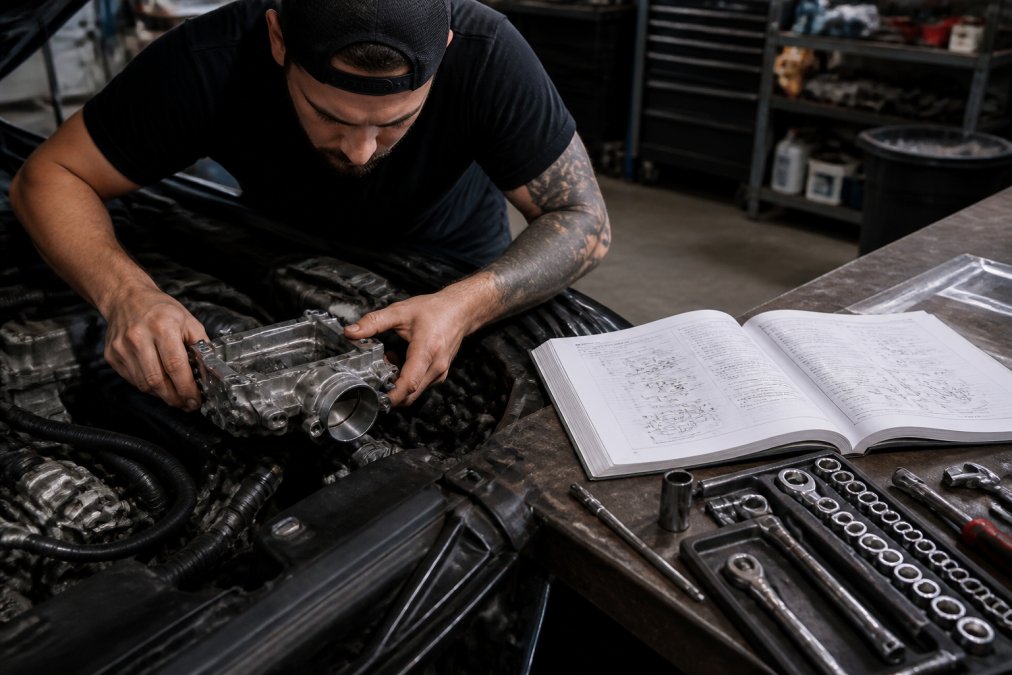
Review the installation manual or technical documentation before purchasing. Legitimate suppliers provide detailed installation instructions that outline required tools, estimated installation time, and any special procedures. If a supplier cannot provide this documentation, ask for it directly, their response tells you whether they stand behind their product.
Assess whether you have the necessary tools and workspace. Simple bolt-on parts, air intake systems, exterior trim, lighting components, typically require standard hand tools and a few hours of work in a garage or driveway. More complex modifications, engine management tuning, suspension geometry changes, internal engine modifications, require specialised diagnostic tools, technical knowledge, and often a professional workshop environment.
Consider whether the installation requires removing other components first. Some performance parts require disassembly of surrounding systems to access the installation location. An intake manifold swap might require removing the engine cover, air filter housing, and fuel injector rail. A suspension upgrade might require removing wheels, brakes, and related components. These multi-step installations increase complexity and installation time significantly.
Determine whether the installation affects your vehicle’s emissions systems or engine management. If the part modifies fuel injection, ignition timing, or emissions equipment, you may need to recalibrate engine management software or have the vehicle diagnostically checked afterward. Some modifications require a professional tuner or specialist workshop. Budget for this cost when evaluating total installation expense.
How to Choose Reliable Performance Parts: Your Decision Checklist
Use this checklist to systematically evaluate any performance part before purchase. Working through each point reduces the risk of costly mistakes and ensures your final selection meets your vehicle’s needs and your performance goals.
| Evaluation Stage | Key Questions | What to Check |
|---|---|---|
| Compatibility | Does this part fit my exact vehicle? | Year, make, model, engine size, transmission type, trim variant |
| Quality Assessment | What do users report about this part’s reliability? | Customer reviews, performance test data, failure patterns |
| Authenticity | Is this part genuine and not counterfeit? | Packaging quality, serial numbers, supplier reputation, traceability |
| Warranty & Standards | What protection does the warranty offer? | Coverage scope, duration, exclusions, compliance with ADR/emissions standards |
| Installation | Can I install this part myself or do I need professional help? | Required tools, installation time, complexity level, special equipment needed |
| Performance Expectations | Will this part deliver the performance improvement I’m seeking? | Documented performance gains, real-world user results, suitability for my usage pattern |
| Total Cost | What’s the true cost including installation and any additional modifications? | Part price, installation labour, required tools, tuning or calibration costs |
Before finalising your purchase, confirm that the supplier offers reliable support if issues arise. Vertexark Auto Parts provides expert support and straightforward returns because we understand that choosing the right performance parts involves multiple decision points. When you’re confident in your selection, the installation process becomes straightforward and your vehicle performs as intended.
Choosing reliable performance parts requires attention to compatibility, quality verification, and honest assessment of installation complexity. The process takes time, but it eliminates costly mistakes and ensures your modifications deliver genuine performance improvements. At Vertexark Auto Parts, we make this process easier by guaranteeing exact fitment, providing industry-leading warranty coverage, and offering expert support when you need guidance. Shop our carefully curated selection of performance components and experience the confidence that comes with parts backed by genuine quality assurance and a 100% customer satisfaction commitment.
Frequently Asked Questions
Q: How can I tell if a performance part will fit my specific vehicle model?
A: Verify fitment by checking the part's vehicle application list against your exact year, make, model, and engine type. Cross-reference the part number with your vehicle's identification number (VIN). Reputable suppliers provide detailed fitment charts and technical documentation. Contact the retailer's support team if the application isn't clear, genuine sellers confirm compatibility before you purchase. Avoid parts listed as 'universal' unless your modification specifically requires one.
Q: What's the difference between OEM and aftermarket performance parts?
A: OEM parts are manufactured to factory specifications and carry the vehicle maker's warranty, ensuring reliability and exact fitment. Aftermarket performance parts are made by third-party manufacturers and often offer enhanced durability, improved material composition, or performance upgrades beyond factory standards. Aftermarket parts typically cost less but may require more careful selection to ensure quality. Choose OEM for critical safety components; consider quality aftermarket options for upgrades and replacements where performance gains matter.
Q: How do I spot counterfeit car parts before buying?
A: Examine packaging quality, serial numbers, and branding details, counterfeits often have poor print quality, misspelled text, or inconsistent logos. Buy only from authorised retailers and verified suppliers. Request certificates of authenticity or ISO certification if available. Check the part's weight, material composition, and finish against genuine examples. Avoid unusually cheap pricing from unknown sources. If a deal seems too good to be true, it probably is. Trusted retailers like Vertexark Auto Parts guarantee authentic parts backed by warranties.
Q: What warranty coverage should I expect for performance parts?
A: Quality performance parts typically come with warranties ranging from 12 months to lifetime coverage, depending on the component and manufacturer. Check what's covered: manufacturing defects, premature failure, or fitment issues. Some warranties exclude wear items, modifications, or improper installation. Read the fine print for exclusions and claims procedures. Reputable suppliers provide clear warranty documentation and honour claims without excessive hassle. Ask about warranty length and coverage scope before purchasing to avoid surprises.
This article was written using GrandRanker