



Best Aftermarket Car Parts Australia: 2026 Guide
Table of Contents
- Top Aftermarket Car Parts Categories Worth Knowing
- Genuine vs Aftermarket Car Parts: What Actually Differs
- How to Check Car Part Compatibility Before You Buy
- Best Aftermarket Car Parts Suppliers and What They Offer
- DIY Installation: Safety, Tools, and What to Know First
- Insurance Implications and Warranty Coverage for Aftermarket Parts
- Sustainability and Recycled Parts: A Growing Option
- Conclusion
Last Updated: August 12, 2026
Sourcing the right aftermarket car parts looks simple until you get it wrong. A mismatched rotor, a suspension kit that doesn’t clear your lift, or a lighting upgrade that fails its roadworthy inspection aren’t hypothetical headaches. This guide covers the best aftermarket car parts categories, how to verify compatibility before you buy, what separates quality tiers, and the angles most guides skip: insurance implications, sustainability options, and DIY safety.
Quick Picks:
- Best for suspension: Old Man Emu (ARB) for 4×4 and off-road; MCA Suspension for performance and track use
- Best for braking: Disc Brakes Australia (DBA) for quality Australian-manufactured rotors and pads
- Best for exhaust: Manta Performance for Australian-made systems; Borla for customisable sound profiles
- Best for lighting: Supernova Lighting for LED upgrades and driving lights
Top Aftermarket Car Parts Categories Worth Knowing
Aftermarket car parts split into two camps: replacement parts (designed to restore a vehicle to factory specification) and performance or modification parts (designed to exceed it). Both have legitimate uses and different compatibility considerations.
| Category | Primary Use | Key Specification to Check |
|---|---|---|
| Suspension kits | Ride height, handling, load capacity | Vehicle make, model, GVM rating |
| Braking systems | Safety, stopping performance | Rotor diameter, pad compound |
| Performance exhaust | Power, sound, fuel efficiency | Engine type, DPF or non-DPF |
| Lighting upgrades | Visibility, compliance | ADR compliance, beam pattern |
| Chassis components | Structural integrity, drivetrain | Torque specs, material grade |
Suspension Kits and Chassis Components
Old Man Emu, an ARB brand, produces complete suspension systems designed and tested for Australian terrain. Their kits are tailored to specific vehicle models and engineered for optimum ride, handling, and load-carrying performance.
MCA Suspension draws on motorsport experience including rally and time attack competition. Their Fusion V3 valving technology offers versatility across driving conditions, making them suitable for both track-day participants and daily drivers.
For chassis components like control arms and sway bar links, material grade and torque rating are critical. Polyurethane bushings offer longer service life than rubber OEM equivalents but transmit more road noise, a trade-off worth knowing before you buy.
Braking Systems and Safety Parts
Disc Brakes Australia (DBA) is the benchmark for aftermarket braking components. As an Australian manufacturer of OE and aftermarket brake rotors, pads, calipers, and hydraulics, DBA covers the full braking system rather than individual components.
The common mistake is treating the rotor and pad as separate decisions. They’re a system. Fitting a high-performance slotted rotor with a standard compound pad wastes the rotor’s capability and causes uneven wear. Match the compound to your driving use case: street, towing, or track.
Fitting aftermarket brake components without checking rotor diameter and caliper clearance against your wheel offset can result in brake drag, vibration, or failure. Always confirm full fitment specs before ordering, not just the vehicle make and model.
Performance Exhaust and Engine Cooling
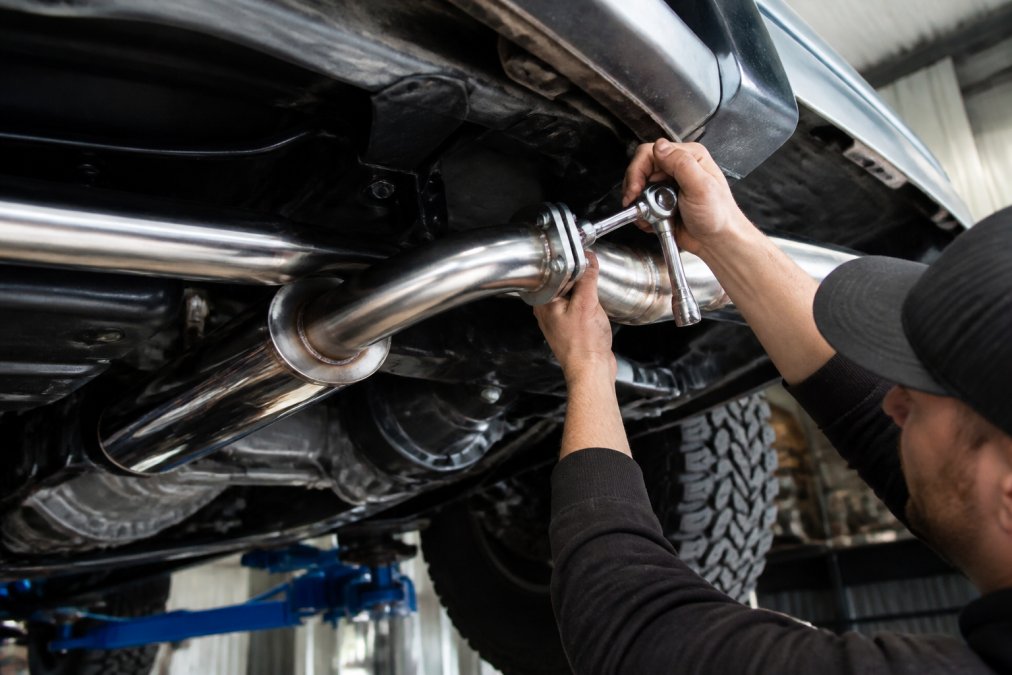
Manta Performance produces Australian-made exhaust systems across DPF-back, turbo-back, and complete replacement configurations. Their anti-drone technology addresses cabin resonance at highway speeds, a common complaint with aftermarket exhausts.
Borla offers three distinct sound levels (ATAK, S-Type, and Touring) built from T-304 austenitic stainless steel with mandrel-bent tubing for maximum flow. The ability to select your sound profile before purchase is a genuine differentiator, with a three-year local warranty.
Engine cooling components, radiators, intercoolers, oil coolers, are less glamorous but consequential. A failing radiator on a modified engine running higher output temperatures is serious. Quality aftermarket cooling uses thicker core construction and better alloy grades than budget alternatives.
Lighting Upgrades and Accessories
LED lighting upgrades are accessible modifications, but compliance is essential. All lighting sold for road use must meet Australian Design Rules for vehicle lighting requirements. Non-compliant lighting can fail a roadworthy inspection.
Supernova Lighting specialises in LED driving lights, light bars, and headlight conversion kits. Lenso Wheels and Koya Wheels offer premium alloy and forged options for performance-oriented builds.
Genuine vs Aftermarket Car Parts: What Actually Differs
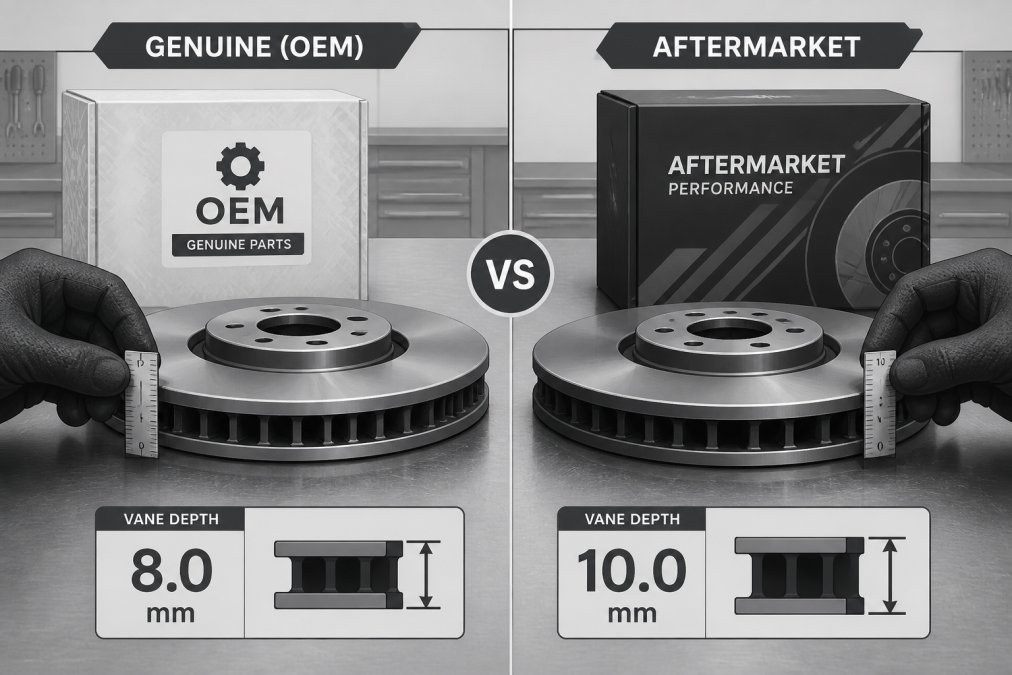
Genuine parts (OEM parts) are manufactured to original equipment specification. Aftermarket parts are produced independently, designed to fit and function in place of the original.
The practical difference comes down to specification tolerance, material grade, and warranty coverage. OEM parts carry the vehicle manufacturer’s warranty and are built to exact tolerances. Quality aftermarket parts from reputable manufacturers match or exceed those tolerances, and in performance categories like exhaust and suspension, they frequently outperform OEM.
The problem isn’t aftermarket as a category. The problem is the bottom of the market, where parts are manufactured to no particular standard and sold on price alone.
Aftermarket Part Quality Grading Explained
Aftermarket part quality grading categorises components by manufacturing standard, material specification, and fit tolerance. Three broad tiers apply:
- OEM-equivalent (Tier 1): Manufactured to match or exceed original specifications. Often produced by the same supplier as the OEM part under a different brand. Right for critical safety components.
- Performance aftermarket (Tier 2): Designed to exceed OEM specifications in power output, heat resistance, or braking performance. Appropriate for modified or high-use vehicles.
- Economy aftermarket (Tier 3): Manufactured to a lower cost point with wider tolerances and shorter service life. Suitable for low-stress applications; risky for safety-critical components.
When buying braking, suspension, or steering components, ask the supplier which tier the part sits in and request the technical specification sheet. A reputable supplier will have this information readily available.
How to Check Car Part Compatibility Before You Buy
Car part compatibility is the single biggest source of buyer frustration in the automotive aftermarket. The correct approach uses multiple verification methods rather than relying on any one alone.
Using VIN Lookup and Part Identification Tools
VIN lookup is the most reliable method for confirming vehicle compatibility. Your Vehicle Identification Number is a 17-character code that encodes your vehicle’s make, model, year, engine variant, and production specification.
Most quality online auto stores provide a VIN lookup tool that cross-references your code against their parts database. This eliminates ambiguity from searching by make and model alone, particularly important for vehicles that changed specifications mid-production year.
Part identification numbers (OEM part numbers) are the second layer of verification. If you have the original part, the part number is stamped or printed on it. Cross-referencing this number against the aftermarket supplier’s database confirms direct replacement compatibility.
According to the Australian Competition and Consumer Commission’s guidance on product warranties, consumers have rights under Australian Consumer Law when a product fails to match its description, including fitment guarantees.
Always verify compatibility using at least two methods: VIN lookup plus part number cross-reference. Relying on make and model alone misses mid-cycle specification changes that affect fitment on many popular Japanese and domestic models.
Best Aftermarket Car Parts Suppliers and What They Offer
The strongest aftermarket suppliers combine verified fitment data, genuine warranty coverage, and accessible technical support.
Vertexark Auto Parts is our top pick for buyers who need confidence in fitment and post-purchase support. The guaranteed exact fit commitment means parts are cross-referenced against your specific vehicle before dispatch. Fast shipping, an industry-leading warranty, and easy returns address the three most common objections buyers raise about online auto parts purchasing. Vertexark Auto Parts stocks engine parts, lighting, interior and exterior accessories, a broad enough inventory that most vehicle maintenance and upgrade needs can be met in a single order.
Old Man Emu / ARB for suspension systems. Their vehicle-specific engineering and local testing make them the reference point for 4×4 suspension upgrades.
Disc Brakes Australia (DBA) for braking components. Australian-designed, widely distributed, and covering the full braking system.
Manta Performance for exhaust systems. Australian-made with anti-drone technology and a range covering the most popular 4x4s and performance vehicles.
MCA Suspension for performance and track-oriented suspension. Motorsport-derived valving with strong local warranty support.
| Supplier | Speciality | Best For | Warranty |
|---|---|---|---|
| Vertexark Auto Parts | Full inventory | Fitment guarantee, DIY buyers | Industry-leading |
| Old Man Emu (ARB) | 4×4 suspension | Off-road and load-carrying | Dealer-supported |
| DBA | Braking systems | Safety-critical replacements | Product warranty |
| Manta Performance | Exhaust systems | 4×4 and performance sound | Australian support |
| MCA Suspension | Performance suspension | Track and performance driving | Local warranty |
DIY Installation: Safety, Tools, and What to Know First
Most aftermarket parts are designed for DIY installation, but "designed for" doesn’t mean "safe without preparation." The gap between a successful home install and a dangerous one is usually planning, not skill.
Before you start, confirm your vehicle is on a flat, stable surface and secured on rated jack stands, never on a hydraulic jack alone. Check that the jack stands are rated above your vehicle’s axle weight, not just its kerb weight.
Minimum tool requirements for most suspension and braking work:
- Torque wrench (critical, do not substitute with a breaker bar and guesswork)
- Vehicle-specific workshop manual or verified online source for torque specifications
- Penetrating fluid for corroded fasteners
- Brake cleaner for rotor and caliper surfaces
- Rated jack stands, minimum two
For exhaust work, add heat-resistant gloves and eye protection. Exhaust components expand and contract significantly, and the fitment sequence matters for leak-free joints.
After replacing control arms, struts, or sway bar components, wheel alignment is not optional. Driving on a vehicle with altered suspension geometry accelerates tyre wear and affects handling. Budget for a wheel alignment as part of the job cost.
According to Safe Work Australia’s guidance on vehicle lifting and safety, working under unsupported vehicles is one of the leading causes of serious workshop injuries.
Insurance Implications and Warranty Coverage for Aftermarket Parts
Aftermarket modifications affect your insurance position in ways that many vehicle owners don’t discover until they make a claim.
Under most comprehensive vehicle insurance policies, modifications must be disclosed to your insurer. Failure to disclose can result in a claim being reduced or denied. Modifications that affect vehicle performance, suspension lifts, exhaust systems, engine tuning, are particularly likely to be flagged.
Most insurers will cover disclosed aftermarket modifications, sometimes with an adjusted premium. Contact your insurer before fitting significant modifications and get written confirmation of coverage.
Under Australian Consumer Law administered by the ACCC, aftermarket parts must be fit for purpose and match their description. A supplier’s warranty extends your protection meaningfully beyond the statutory minimum.
A common misconception: fitting aftermarket parts does not automatically void your vehicle manufacturer’s warranty. The manufacturer must demonstrate that the aftermarket part caused the failure to deny a warranty claim.
Sustainability and Recycled Parts: A Growing Option
The environmental footprint of vehicle maintenance is a genuine consideration for a growing segment of buyers. Recycled and remanufactured parts represent a credible alternative for specific applications.
Recycled parts are salvaged from end-of-life vehicles, inspected, and resold. They’re most appropriate for body panels, trim components, and non-safety-critical mechanical parts where exact OEM specification is required but new supply is expensive or discontinued.
Remanufactured parts are stripped, rebuilt to specification, and tested before resale. Quality remanufactured parts carry their own warranty and perform comparably to new components.
For buyers, the practical question is application. Safety-critical components, braking, steering, suspension, should use new parts with verified specifications. For trim, body, and ancillary components, recycled parts offer genuine cost and environmental savings without meaningful safety trade-offs.
When sourcing recycled parts, ask the supplier for the odometer reading and service history of the donor vehicle where available. Parts from low-kilometre vehicles in clean condition offer significantly better service life than those from high-use or poorly maintained vehicles.
Choosing the right aftermarket car parts comes down to three things: verified fitment, quality grading, and post-purchase confidence. Vertexark Auto Parts addresses all three directly: the guaranteed exact fit commitment removes the fitment risk, the industry-leading warranty covers quality, and easy returns with real customer support handle the rest. Shop now at Vertexark Auto Parts and find the right part for your specific vehicle, backed by the confidence that every journey stays secure.
Frequently Asked Questions
Are aftermarket car parts as good as genuine parts?
Quality varies across the aftermarket sector, but many aftermarket parts match or exceed OEM specifications. The difference comes down to the grade of part you choose. Reputable suppliers stock parts built to Australian automotive industry standards, with warranty coverage that reflects genuine confidence in the product. For non-critical components like lighting, exhaust systems, and suspension kits, quality aftermarket options often deliver better performance than the factory equivalent at a lower overall cost.
How do I ensure aftermarket parts fit my vehicle?
The most reliable method is VIN lookup, which ties a part directly to your vehicle's exact build specification. Beyond that, cross-referencing your vehicle's make, model, year, engine code, and body variant eliminates most fitment errors. Reputable online auto stores offering a fitment guarantee or compatibility checker reduce the risk further. If you are unsure, contact the supplier's technical support team before ordering rather than after, it saves time and avoids return freight costs.
Do aftermarket parts affect my vehicle's warranty?
Under Australian Consumer Law, a manufacturer or dealer cannot void your vehicle warranty simply because you fitted aftermarket parts, unless they can demonstrate that the aftermarket part directly caused the fault being claimed. This protection is enforced by the Australian Competition and Consumer Commission (ACCC). That said, fitting parts that fall outside your vehicle's approved specifications can create complications, so always check technical specifications and keep installation records.
What should I look for when buying car parts online?
Prioritise suppliers that offer a fitment guarantee, clear warranty terms, and accessible customer support, not just a low price. Check whether the site provides VIN lookup or a compatibility tool, and read the returns policy carefully before purchasing. Secure checkout, transparent shipping timeframes, and an Australian business address are also practical indicators of a trustworthy online auto store. Avoid suppliers who cannot confirm vehicle compatibility before sale.
What is the best website for buying car parts in Australia?
The best online auto store for aftermarket car parts depends on what you need. For a broad inventory covering engine parts, suspension kits, braking systems, lighting, and interior accessories, all with a guaranteed exact fit and industry-leading warranty, Vertexark Auto Parts is worth checking first. For specialist categories like performance exhaust systems, dedicated brands such as Manta or Borla offer deep product ranges. Always verify vehicle compatibility and warranty coverage before committing.
This article was written using GrandRanker