



How to Identify Correct Vehicle Parts: A Step-by-Step Guide
Table of Contents
- Why Identifying the Right Vehicle Parts Matters
- How to Find Car Parts by Registration Number
- Using a VIN Decoder for Car Parts Compatibility
- OEM vs Aftermarket Parts Comparison
- Reading Build and Compliance Plates
- Step-by-Step Part Search Process
- Common Mistakes to Avoid When Ordering Parts
- Conclusion
Last Updated: August 24, 2026
Why Identifying the Right Vehicle Parts Matters
Getting the wrong part is more than an inconvenience, it’s wasted money, wasted time, and a vehicle that’s still broken. The stakes are real. A mismatched component can fail to fit, perform poorly, or even damage your engine. This is why learning how to identify correct vehicle parts is essential for anyone maintaining their own vehicle or shopping online.
When you order a replacement without verifying compatibility, you’re gambling. Some retailers make it easy to get it wrong. Others provide tools to help, but those tools only work if you know what information to feed them. The difference between a smooth repair and a frustrating return often comes down to one thing: did you verify the part would actually work before clicking purchase?
Many vehicle owners have experienced the sinking feeling of receiving a part that doesn’t fit. It happens because part numbers look similar, model years overlap, and engine codes can be confusing. This guide walks you through the exact steps professionals use.
How to Find Car Parts by Registration Number
Your registration number is the quickest way to narrow down which parts will work for your vehicle. It tells the system what you’re driving, and from there, the right parts become obvious.
What Your Registration Number Tells You
Your registration number (called your VRM, or Vehicle Registration Mark) is the unique identifier printed on your number plate. When you enter it into a parts lookup system, the database cross-references it against millions of vehicle records to pull up your exact make, model, year, engine type, and trim level. This information is critical because two vehicles that look identical might have completely different parts underneath.
The registration number system works because each registration is linked to the vehicle’s official records. A 2015 Honda Civic and a 2016 Honda Civic might share the same body style, but their engine management systems, sensors, and internal components often differ (nhtsa.gov). The registration number tells the system which one you have, so it can recommend parts that actually fit.
Using VRM Lookup Tools
Most online auto parts retailers now offer VRM lookup tools on their websites. Here’s how to use one effectively:
- Navigate to the parts retailer’s homepage and find the "Search by registration" or "VRM lookup" option
- Enter your full registration number exactly as it appears on your number plate
- The system will display your vehicle’s confirmed details: make, model, year, engine size, and transmission type
- Review these details carefully, if anything looks wrong, stop and verify before proceeding
- Browse the parts catalogue filtered for your specific vehicle
The power of this approach is that it eliminates guesswork. Once the system confirms your vehicle, every part shown should be compatible. However, the quality of the lookup depends on the retailer’s database. Larger retailers with comprehensive inventory typically have more accurate records.
If the VRM lookup returns no results or shows a vehicle that doesn’t match yours, try entering the registration without spaces. Some systems are sensitive to formatting.
Using a VIN Decoder for Car Parts Compatibility
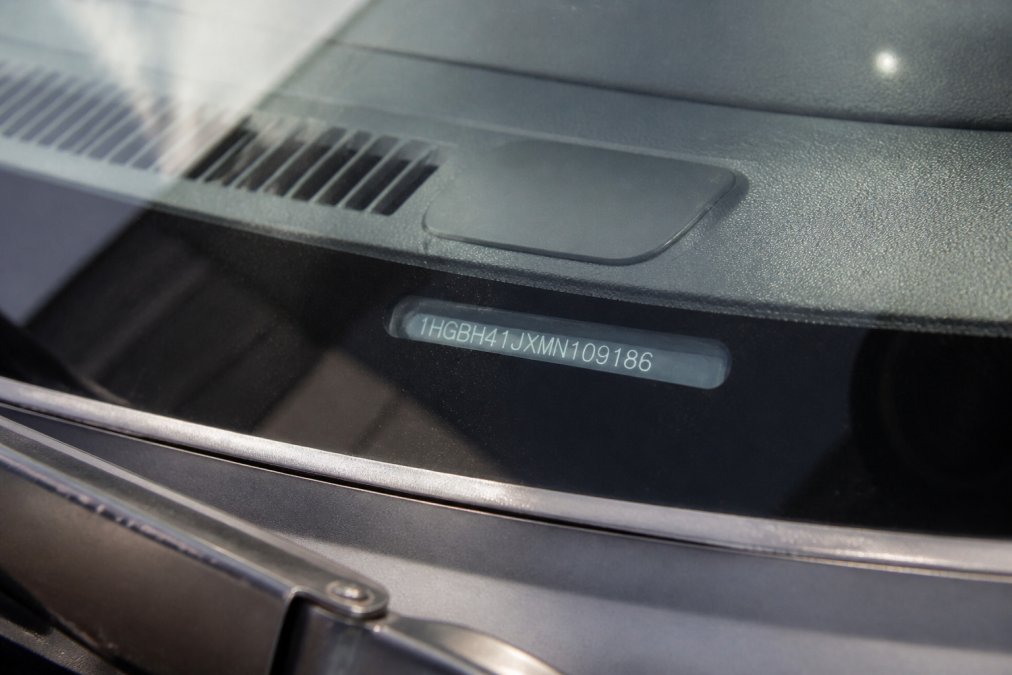
When a VRM lookup isn’t available or you need deeper technical information, the Vehicle Identification Number (VIN) becomes your next tool. The VIN is a 17-character code that tells you almost everything about your vehicle’s specifications and build (nhtsa.gov).
Locating Your Vehicle Identification Number
The VIN is typically found in three places on your vehicle:
- On the dashboard, visible through the windscreen on the driver’s side (look at the lower left corner of the windscreen)
- On the driver’s side door jamb, printed on a sticker or plate
- In your vehicle’s service records or registration documents
Once you’ve located it, write it down carefully. A single wrong character will throw off the entire decoder.
What the VIN Reveals About Your Vehicle
A VIN decoder breaks down each character position to reveal specific information about your vehicle. Here’s what matters for part identification:
- Characters 1-3: Country of origin and manufacturer
- Characters 4-8: Vehicle type, engine code, and transmission type
- Character 9: Check digit (validates the VIN)
- Character 10: Model year
- Character 11: Manufacturing plant
- Characters 12-17: Serial number
For parts compatibility, the engine code and model year are most critical. Two vehicles from the same manufacturer with different engine codes will need different fuel injectors, spark plugs, and air filters. The model year tells you which generation of parts you need, sometimes a single year change means completely different internal components.
Using a VIN decoder online (search "VIN decoder" in any browser) will extract this information automatically. Many parts retailers also include VIN decoding in their search tools, so you don’t have to do it manually.
OEM vs Aftermarket Parts Comparison
The choice between OEM (Original Equipment Manufacturer) and aftermarket parts affects both cost and fitment certainty. Understanding the difference helps you make an informed decision.
Identifying OEM Parts
OEM parts are manufactured by the same company that built your vehicle. A Honda OEM part comes from Honda’s supply chain, a Toyota OEM part from Toyota’s. These parts are engineered to exact specifications and carry part numbers that match your vehicle’s factory documentation.
OEM parts are typically more expensive than aftermarket alternatives. However, they come with one major advantage: guaranteed fitment. When you order an OEM part using your VIN or registration number, you know it will work because it’s the exact part the manufacturer installed on your vehicle.
To identify an OEM part:
- Check the part number against your vehicle’s service manual or technical documentation
- Look for the manufacturer’s logo or branding on the part itself
- Verify the part number through the vehicle manufacturer’s official parts catalogue
- Purchase from an authorised dealer or verified OEM supplier
Counterfeit OEM parts exist. If a price seems unusually low for an OEM component, verify the seller’s credentials before purchasing.
Identifying Aftermarket Parts
Aftermarket parts are manufactured by third-party companies, not the original vehicle manufacturer. These parts are designed to fit your vehicle but come from a different supply chain. Quality varies dramatically across aftermarket suppliers, some are excellent and nearly indistinguishable from OEM parts, while others are significantly lower quality.
Aftermarket parts are usually cheaper than OEM equivalents, sometimes by 30-50% (peer-reviewed research). For budget-conscious vehicle owners, this can be a major advantage. However, fitment can be less predictable, especially with older vehicles or less common models.
To identify a quality aftermarket part:
- Check customer reviews and ratings from multiple sources
- Verify the part number matches your vehicle’s specifications
- Confirm the seller offers returns if fitment is incorrect
- Look for parts that carry warranties or guarantees
- Cross-reference the part number with multiple fitment databases
At Vertexark Auto Parts, we stock quality aftermarket parts backed by industry-leading warranties. The choice between them depends on your priorities, guaranteed exact fitment versus cost savings.
Reading Build and Compliance Plates
Your vehicle’s build plate and compliance plate contain official specifications that help you verify part compatibility. These metal plates are usually found on the driver’s side door jamb or under the bonnet.
The build plate lists your vehicle’s build specifications: engine code, transmission type, paint colour, and trim level. The compliance plate shows regulatory information and confirms the vehicle meets safety and emissions standards for its market.
When identifying parts, cross-reference the engine code on the build plate with the part you’re considering. A part designed for a 2.0-litre engine won’t fit a 1.6-litre engine, even if both are in the same model year. The build plate removes ambiguity.
The compliance plate also tells you which market your vehicle was built for. A vehicle built for one country might have different electrical or emissions components than an identical model built for another market. This information matters when ordering parts from international suppliers.
Step-by-Step Part Search Process
Following a systematic approach to part identification eliminates most mistakes. Here’s the exact process professionals use.
Step 1: Gather Your Vehicle Information
Before searching for a part, collect all relevant information about your vehicle:
- Registration number (from your number plate)
- VIN (from the dashboard or door jamb)
- Vehicle make, model, and year
- Engine type and size (from the build plate)
- Transmission type (manual or automatic)
- Trim level or specification (if known)
Write this information down. Having it ready saves time and reduces the chance of entering incorrect details into search systems.
Step 2: Identify the Part Number on Your Existing Component
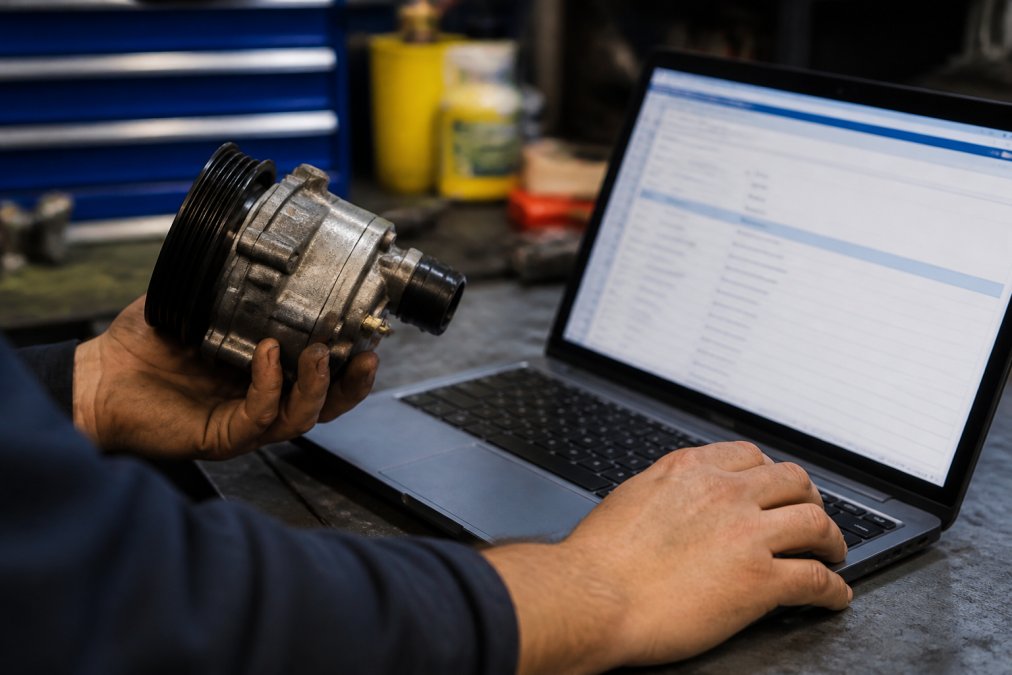
If you’re replacing an existing part, the old part itself often carries a part number. This is the most direct route to finding an exact replacement.
Look for a part number stamped, printed, or embossed on the component you’re replacing. For engine parts, check the housing. For electrical components, check the casing. For interior trim, look on the back or underside.
Write down the complete part number exactly as it appears. Don’t assume you can remember it or reconstruct it later, transcription errors are common.
Step 3: Cross-Reference Using Online Tools
Enter the part number into multiple fitment databases. Most major parts retailers offer free search tools that don’t require you to purchase anything. This step confirms whether the part number is valid and which vehicles it fits.
If you found the part number on an old component, the database should confirm it’s compatible with your vehicle. If the database returns no results, the part number might be worn or misread, go back and verify it carefully.
Step 4: Verify Fitment Match and Compatibility
Once you’ve found a part that matches your vehicle’s specifications, verify the fitment match one more time. Check:
- The vehicle make, model, and year match yours exactly
- The engine code or engine size matches your build plate
- The transmission type (manual or automatic) is correct
- Any trim-specific details (if applicable) are accounted for
A part that’s 99% compatible is still wrong. It might fit mechanically but fail electrically, or it might fit the engine bay but interfere with other components.
Step 5: Check Critical Installation Points and Dimensions
Before finalizing your order, verify that the part’s dimensions and mounting points match your vehicle. This is especially important for larger components like radiators, fuel tanks, or suspension parts.
Check the technical drawing or specification sheet provided by the seller. Look for:
- Overall dimensions (length, width, height)
- Mounting point locations
- Connector types and positions
- Clearance requirements (will it fit without hitting other components?)
Many fitment issues arise from components that are mechanically similar but dimensionally different. A fuel pump might have the same function as your original, but if the inlet and outlet are positioned differently, it won’t work.
Dimensional verification is the step most people skip, and it’s the one that catches incompatibilities that part numbers miss.
Common Mistakes to Avoid When Ordering Parts
Learning what goes wrong helps you avoid the same traps.
Assuming all model years are identical. A 2010 Honda Civic and a 2011 Honda Civic often share the same body style but have different internal components. Always verify the exact year, not just the model name.
Trusting part number similarity. Two part numbers that differ by a single digit might be completely different parts. Always verify the exact part number, not a "close enough" version.
Ordering before confirming fitment. The cheapest mistake is the one that costs time and money to return. Verify fitment before ordering, not after.
Ignoring transmission type. Automatic and manual transmissions require different components. A part designed for one won’t work for the other, even in the same vehicle model.
Skipping the dimensional check. Two parts might have the same function but different dimensions. Always compare the technical specifications, not just the part description.
Purchasing from sellers without return policies. If a part doesn’t fit, you need a way to send it back. Sellers who don’t offer returns are a red flag.
Identifying the correct vehicle parts comes down to verification at every step. Use your registration number to confirm your vehicle’s specifications, cross-reference part numbers across multiple databases, and always check dimensions before ordering. When you’re uncertain, reach out to a parts supplier with real customer support. At Vertexark Auto Parts, our team can help you verify fitment and find the exact part you need, backed by our industry-leading warranty and guaranteed exact fit. Shop now and get your vehicle back on the road with confidence.
Frequently Asked Questions
How do I know if a replacement part will actually fit my vehicle?
Start with your vehicle's VIN or registration number to confirm exact specifications. Check the part number on your existing component and cross-reference it against the replacement. Verify fitment match by comparing critical dimensions, installation points, and mounting hardware. Use online fitment tools to confirm compatibility before ordering. Always check the product description for your specific model year, trim level, and body style to avoid fitment errors.
What's the difference between OEM and aftermarket parts?
OEM (original equipment manufacturer) parts are made by your vehicle's manufacturer or authorised suppliers, matching exact factory specifications. Aftermarket parts are produced by third-party manufacturers and may offer different quality levels and pricing. OEM parts guarantee perfect fitment but typically cost more. Quality aftermarket parts can perform equally well at lower cost, though you must verify compatibility carefully. Check part numbers and specifications to ensure either option fits your vehicle correctly.
How do I use a registration number to find the correct car parts?
Your registration number (VRM) contains encoded information about your vehicle's make, model, and year. Enter your registration into a VRM lookup tool to retrieve your vehicle's exact specifications, including engine code, transmission type, and build details. This information narrows down compatible parts significantly. Compare the results with your vehicle's build and compliance plates for additional confirmation. Many online retailers offer registration-based fitment tools that automatically filter parts compatible with your specific vehicle.
What information should I gather before ordering a replacement part?
Collect your vehicle's registration number, VIN, model year, trim level, and body style. Locate the part number on your existing component, this is often stamped or printed on the part itself. Note the engine code, transmission type, and drivetrain (front-wheel drive, rear-wheel drive, etc.). Take photos of the original part showing all identification markings. Having this information ready prevents ordering the wrong fitment and speeds up the search process significantly.
This article was written using GrandRanker