



Identifying Genuine Performance Engine Parts: A 2026 Guide
Table of Contents
- Why Identifying Genuine Performance Engine Parts Matters
- Genuine vs Aftermarket Performance Parts: What’s the Difference
- How to Spot Fake Car Parts: Visual Inspection Techniques
- Checking Part Numbers for Vehicle Compatibility
- Digital Verification Tools and Supply Chain Transparency
- Legal and Warranty Implications of Counterfeit Engine Parts
- Risks of Using Counterfeit Engine Components
- Where to Source Genuine Performance Engine Parts
Last Updated: August 23, 2026
Why Identifying Genuine Performance Engine Parts Matters
Counterfeit engine parts create cascading failures that damage surrounding components, void warranties, and leave you stranded. A fake fuel injector, spark plug, or timing belt doesn’t just underperform, it can trigger chain reactions costing thousands to repair. The financial difference between genuine and counterfeit parts is modest, yet damage from a fake component costs ten times more to fix.
Counterfeit components fail to meet precision engineering and manufacturing tolerances required for reliable engine operation. They also create legal complications: most vehicle warranties explicitly exclude coverage for non-genuine parts. If your engine fails after installing a counterfeit component, you’ve eliminated manufacturer warranty protection.
Identifying genuine performance engine parts isn’t difficult once you know what to look for. The distinction comes down to packaging authenticity, security features, part number verification, and supply chain transparency.
Genuine vs Aftermarket Performance Parts: What’s the Difference
Understanding the difference between genuine and aftermarket components is essential before identifying counterfeits.
Original Equipment Manufacturer (OEM) Components
Original equipment manufacturer (OEM) components are parts manufactured by or for the vehicle’s original manufacturer. These parts meet exact specifications established during the vehicle’s design phase and undergo the same quality assurance testing as factory components.
OEM parts guarantee fitment accuracy, precise manufacturing tolerances, verified thermal resistance, and corrosion resistance meeting original specifications. They maintain warranty compliance and come with manufacturer backing. The supply chain is controlled and documented, with traceability maintained through each step from manufacturer to retailer. You can verify authenticity through serial number tracking and barcode scanning.
Quality Aftermarket Alternatives
Aftermarket performance parts are manufactured by third-party suppliers to match or exceed original specifications. Quality aftermarket manufacturers conduct third-party testing, publish performance data, and warrant their products. Reputable aftermarket fuel injectors, for example, undergo rigorous testing equivalent to OEM components.
Counterfeit parts masquerade as either OEM or quality aftermarket components while meeting neither standard. They skip quality assurance testing, use inferior materials, and rely on deceptive packaging. The distinction is fundamental: genuine aftermarket parts are tested; counterfeits are untested.
How to Spot Fake Car Parts: Visual Inspection Techniques
Visual inspection forms your first line of defence against counterfeit engine parts. Examine packaging, labelling, security features, and the physical part before installation.
Packaging and Labelling Authenticity
Genuine engine parts arrive in professional packaging reflecting quality manufacturing standards. Examine the box first: genuine OEM packaging uses consistent, professional printing with sharp text and accurate colour reproduction. Counterfeit packaging shows printing inconsistencies, blurry text, misaligned graphics, colour variations, or spelling errors.
Check for instruction manuals. Genuine parts include detailed installation instructions, specifications, and warranty information matching the part number. Counterfeit parts often ship without manuals or include generic, poorly translated instructions.
Labelling on the part itself should be clear and permanent, displaying manufacturer name, part number, and manufacturing date with consistent quality. Counterfeit parts show faded, misaligned, or poorly printed labels.
Security Features and Holographic Labels
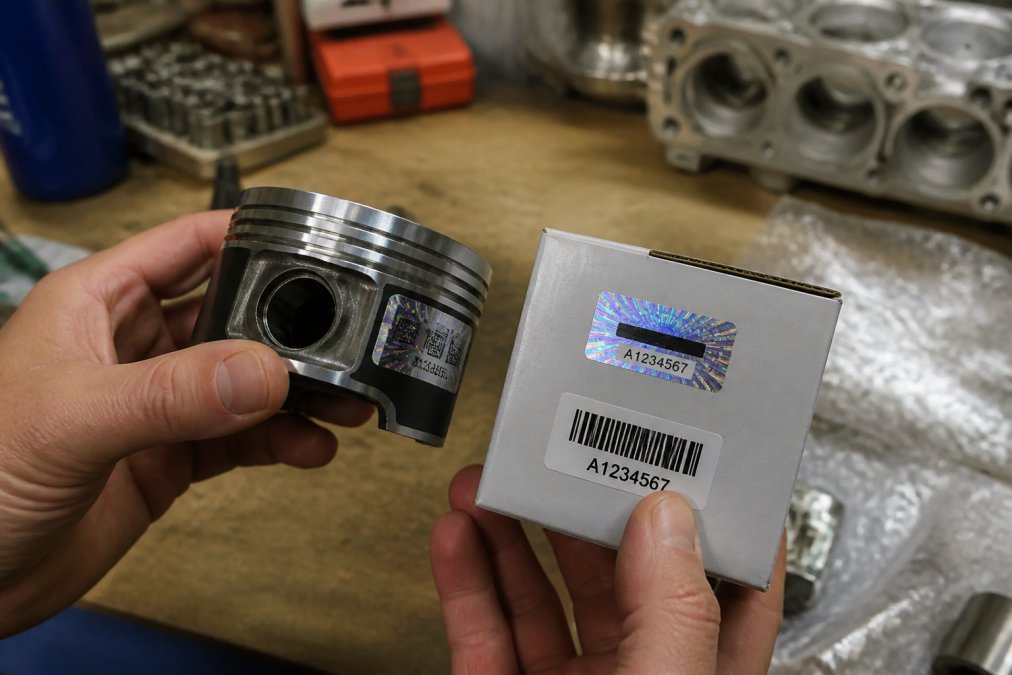
Modern genuine parts incorporate security features designed to prevent counterfeiting. Holographic security labels display colour-shifting properties when tilted; the image changes as you adjust the viewing angle. Counterfeit versions either lack this feature or use static labels that don’t shift. Genuine holographic labels feel slightly raised and smooth when touched.
Check for security holograms integrated into packaging or attached with tamper-evident adhesive. If the hologram appears loose, faded, or easy to remove, it’s counterfeit. Some manufacturers include microtext or hidden images within security features, virtually impossible for counterfeiters to replicate without original manufacturing equipment.
Physical Component Inspection
Genuine engine components display consistent, professional finishing. Metal components should have uniform colour and texture without rough spots, pitting, or inconsistent plating. Run your hand over the component; it should feel smooth and precisely finished.
Check threaded connections and attachment points. Genuine components use precision engineering ensuring clean, consistent, properly formed threads. Counterfeit parts exhibit rough or poorly formed threads that don’t fit properly.
Inspect seals or gaskets included with the part. Genuine seals are made from appropriate materials and maintain shape and flexibility. Counterfeit seals often feel brittle, cracked, or chemically incorrect. Weight is another indicator, genuine components are manufactured from specified materials giving them appropriate weight for their size. A fuel injector should feel substantial and balanced; unexpectedly light or heavy components warrant verification before installation.
Checking Part Numbers for Vehicle Compatibility
Part number verification is your most reliable technical method for confirming authenticity. Every genuine component carries a part number corresponding to specific vehicle applications and manufacturing standards.
Decoding Part Number Systems
OEM part numbers typically include prefixes or suffixes indicating manufacturing period, revision level, or regional variant. These codes are consistent across all genuine components from that manufacturer. Counterfeiters sometimes use completely fabricated part numbers or copy numbers from different component categories.
The part number should appear consistently across the component, packaging, and documentation. If numbers differ between the component, box, and manual, the component is counterfeit.
Barcode and Serial Number Verification
Scan the barcode using a smartphone barcode reader app. Genuine barcodes resolve to legitimate product information in manufacturer databases and should match the part number on the component and packaging. If the barcode doesn’t scan or resolves to incorrect information, the component is counterfeit.
Serial numbers provide individual tracking for high-value components. Enter the serial number into the manufacturer’s verification system; genuine components return a match with manufacturing date and original distribution information.
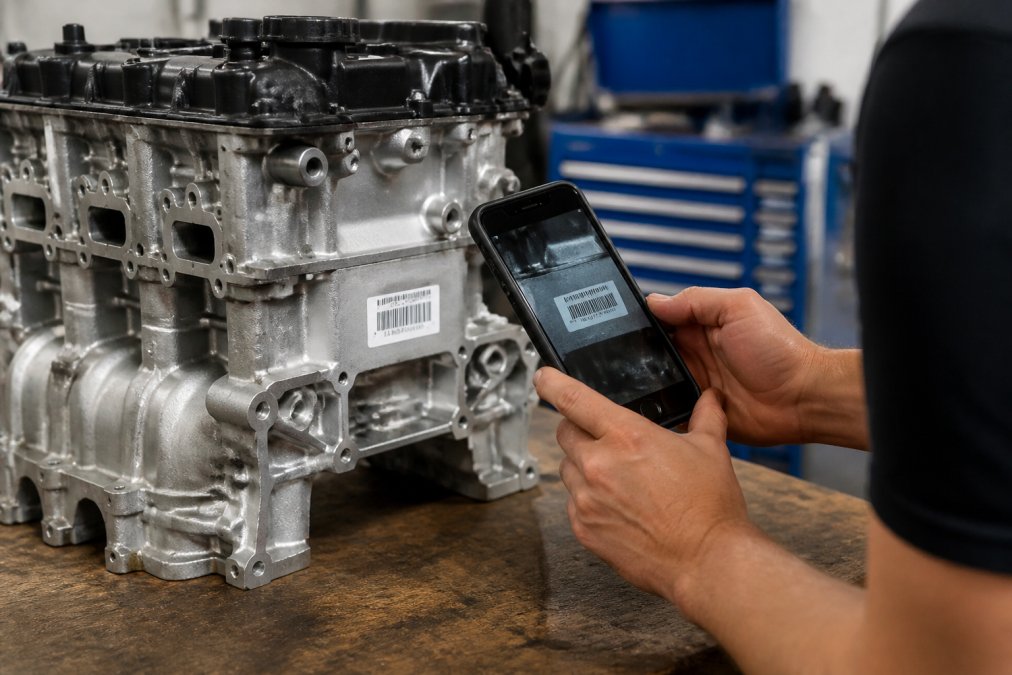
Genuine barcodes are crisp and scannable; if your phone struggles to read the code, it’s likely counterfeit.
Digital Verification Tools and Supply Chain Transparency
Digital verification represents the most advanced method for confirming authenticity. Manufacturer verification websites allow you to enter a part number or serial number and receive immediate confirmation of authenticity, including manufacturing date, original distribution channel, and specifications. If a component doesn’t exist in the manufacturer’s database, it’s counterfeit.
QR codes printed on genuine packaging link directly to manufacturer verification pages. Scanning the QR code takes you to a page where you can verify authenticity and access installation instructions. Counterfeit QR codes either don’t work or link to fraudulent pages.
Supply chain transparency platforms track components from manufacture through distribution. Some manufacturers use blockchain-based systems creating immutable records of each component’s journey ([EXTERNAL_LINK: ISO’s focus on supply chain transparency | iso.org]). You can scan a code and see its complete history: manufacturing date, authorised distributors, and sale date. This transparency makes counterfeiting nearly impossible.
Request supply chain documentation when purchasing from online retailers. Genuine retailers can provide proof of purchase from authorised distributors, including invoices, distributor credentials, and batch numbers corresponding to your component.
Legal and Warranty Implications of Counterfeit Engine Parts
Installing counterfeit engine parts creates significant legal and financial consequences. Most vehicle manufacturers explicitly exclude warranty coverage for non-genuine components. If your engine fails after installing a fake fuel injector, the manufacturer will not cover repairs, even if the counterfeit part didn’t directly cause the failure.
Liability issues arise when counterfeit components cause accidents or injuries. Your insurance policy may not cover damage caused by known use of counterfeit components, leaving you personally responsible. Some jurisdictions have consumer protection laws addressing counterfeit automotive parts specifically.
Resale value is affected by non-genuine components. Disclosure is often required when selling your vehicle, and potential buyers demand price reductions or walk away if counterfeit components are discovered. The cost savings from buying a fake part is quickly erased by reduced resale value.
Risks of Using Counterfeit Engine Components
Counterfeit parts frequently fail prematurely because they don’t meet manufacturing tolerances or performance standards. A fake spark plug might fail after 5,000 kilometres instead of 15,000. A counterfeit fuel injector can develop internal leaks contaminating the fuel system.
Material composition is often inferior, meaning thermal and corrosion resistance are inadequate. An engine component lasting 100,000 kilometres might fail at 20,000 due to improper material treatment.
Mechanical failure risks extend beyond the counterfeit component. A fake timing belt can slip, causing catastrophic engine damage. A counterfeit sensor can provide incorrect data to the engine control unit, causing incorrect engine operation and damage to other components. These cascading failures turn simple component replacement into major engine rebuilds.
Safety hazards emerge when counterfeit parts fail during operation. A fake fuel injector failing while driving can cause engine stalling. A counterfeit sensor failure can trigger warning lights and unpredictable engine behaviour, creating dangerous driving conditions.
Where to Source Genuine Performance Engine Parts
Sourcing genuine components from reliable suppliers eliminates counterfeiting risk.
Authorised dealership parts departments represent the safest option. Dealerships purchase directly from manufacturers or authorised distributors, maintaining complete supply chain documentation. Every part carries the manufacturer’s warranty and verified authenticity.
Specialist automotive retailers like Vertexark Auto Parts maintain rigorous supplier relationships and verification processes, working exclusively with authorised distributors and conducting regular audits. When you purchase from Vertexark Auto Parts, you’re buying from someone invested in reputation and customer satisfaction, backed by industry-leading warranties and exact fit guarantees for your vehicle.
Online retailers vary significantly in verification standards. Purchase only from retailers providing supply chain documentation with authorised distributors. Avoid retailers unable to explain their sourcing or offering suspiciously low prices on genuine parts.
Independent mechanics often have established relationships with reliable suppliers. Ask where they source components and whether they can provide authenticity documentation. Mechanics who install counterfeit parts risk their reputation and liability, so they typically maintain high standards.
Avoid purchasing from general marketplaces or international sellers unless you can verify their authorisation status with the manufacturer. These channels often lack verification infrastructure necessary to guarantee authenticity.
Identifying genuine performance engine parts protects your vehicle’s reliability, maintains warranty coverage, and ensures your safety. Visual inspection, part number checking, barcode scanning, and digital verification give you tools to distinguish authentic components from counterfeits before installation. When you source components from verified retailers like Vertexark Auto Parts, you’re investing in exact fit guarantees, industry-leading warranties, and the confidence that your engine contains genuine, tested components designed to keep your vehicle running reliably for years to come.
Frequently Asked Questions
How can I verify if a performance engine part is genuine OEM?
Check the packaging for manufacturer branding, holographic security labels, and correct spelling. Verify the part number against your vehicle's specifications using the manufacturer's official database. Examine the component itself for precision engineering, proper finish, and clear marking of the original equipment manufacturer name. Purchase only from authorised distributors to ensure supply chain authenticity. Genuine OEM parts include complete instruction manuals and warranty documentation.
What's the difference between genuine, OEM, and quality aftermarket performance parts?
Genuine OEM parts are manufactured by the original equipment manufacturer to factory specifications and performance standards. OE parts meet those same standards but may come from licensed suppliers. Quality aftermarket components are made by independent manufacturers to meet or exceed factory specifications, often at lower cost, but carry different warranty terms. Genuine parts guarantee fitment accuracy and vehicle safety integrity; reputable aftermarket parts offer good performance but require careful verification of manufacturing tolerances and independent certification.
What are the primary risks of installing counterfeit engine components?
Counterfeit parts often fail to meet manufacturing tolerances and performance standards, causing mechanical failure, reduced engine longevity, and safety hazards. They may lack thermal resistance and corrosion resistance, leading to premature wear. Installing counterfeits can void your vehicle warranty and create legal liability. Fake components may damage other engine systems, resulting in expensive repairs. Supply chain traceability is lost, making diagnosis difficult if problems arise.
How do I check part numbers to ensure compatibility with my vehicle?
Locate your vehicle's VIN and cross-reference it with the manufacturer's parts catalogue to find the correct part number. Compare the part number on the component's label with the official specification. Use barcode scanning apps to verify serial number tracking information. Check the instruction manual for fitment requirements and thermal specifications. Contact the manufacturer directly or use their digital verification tools to confirm the part number matches your vehicle model and engine type.
What security features should I look for on genuine automotive packaging?
Authentic packaging includes holographic security labels with manufacturer branding, sequential serial numbers, and tamper-evident seals. Check for correct spelling, professional printing quality, and proper colour reproduction. Genuine packaging displays the manufacturer's contact details, warranty information, and assembly country. Barcodes should scan correctly and match the part number printed on the label. Instructions should be clearly written with technical specifications and proper fitment diagrams included.
Can a VIN check tell me if replacement parts are genuine?
A VIN check identifies your vehicle's original specifications and factory part numbers, but it doesn't guarantee a replacement part's authenticity. Use your VIN to find the correct part number, then verify the actual component against that specification. A VIN confirms what genuine parts should be fitted; you still need to inspect packaging, security features, and part numbers on the component itself. Digital verification tools can cross-reference your VIN with manufacturer databases for added confidence.
Why is using genuine parts critical for high-performance engine builds?
Genuine parts meet precise manufacturing tolerances and performance standards designed for your specific engine. They ensure vehicle safety integrity, proper fitment accuracy, and maximum engine longevity. Counterfeit or substandard components can cause thermal stress, corrosion, and mechanical failure in high-performance applications. Genuine parts maintain warranty compliance and preserve resale value. Performance builds demand components that work together seamlessly; genuine parts guarantee that reliability.
How do I verify authenticity using digital tools?
Many manufacturers offer online serial number tracking systems where you enter the part's serial number to confirm authenticity and supply chain history. Barcode scanning apps can verify that the barcode matches the part number and manufacturer database. Some brands provide QR codes on packaging that link to verification pages. Contact the manufacturer's technical support directly with your part number and serial information for independent certification. Use these tools alongside physical inspection for complete verification.
This article was written using GrandRanker