



Reliable Aftermarket Parts for Japanese Cars
Table of Contents
- Why Reliable Aftermarket Parts Matter for Japanese Vehicles
- How to Identify High-Quality Engine Parts
- Top Aftermarket Parts Brands for Japanese Cars
- Genuine vs Aftermarket Car Parts Comparison
- Aftermarket Parts Warranty in Australia
- Sourcing Quality Parts: Shipping and Compatibility
- Suspension and Performance Upgrades
- Conclusion
Last Updated: August 22, 2026
Why Reliable Aftermarket Parts Matter for Japanese Vehicles
Japanese vehicles earn their durability reputation through quality maintenance, and the parts you choose directly affect performance, safety, and resale value. Quality aftermarket alternatives deliver genuine performance at a fraction of OEM costs, provided you know what to look for.
At Vertexark Auto Parts, we work with DIY enthusiasts and budget-conscious owners who understand that reliable aftermarket parts for Japanese cars require authenticity, proper fitment, and real warranties. This guide covers what separates trustworthy components from counterfeits, how to verify what you’re buying, and which brands have earned their reputation through consistent performance.
The most common mistake DIY mechanics make is assuming all aftermarket parts are created equal. A spark plug from NGK performs entirely differently from a no-name equivalent, even if both fit your engine bay.
How to Identify High-Quality Engine Parts
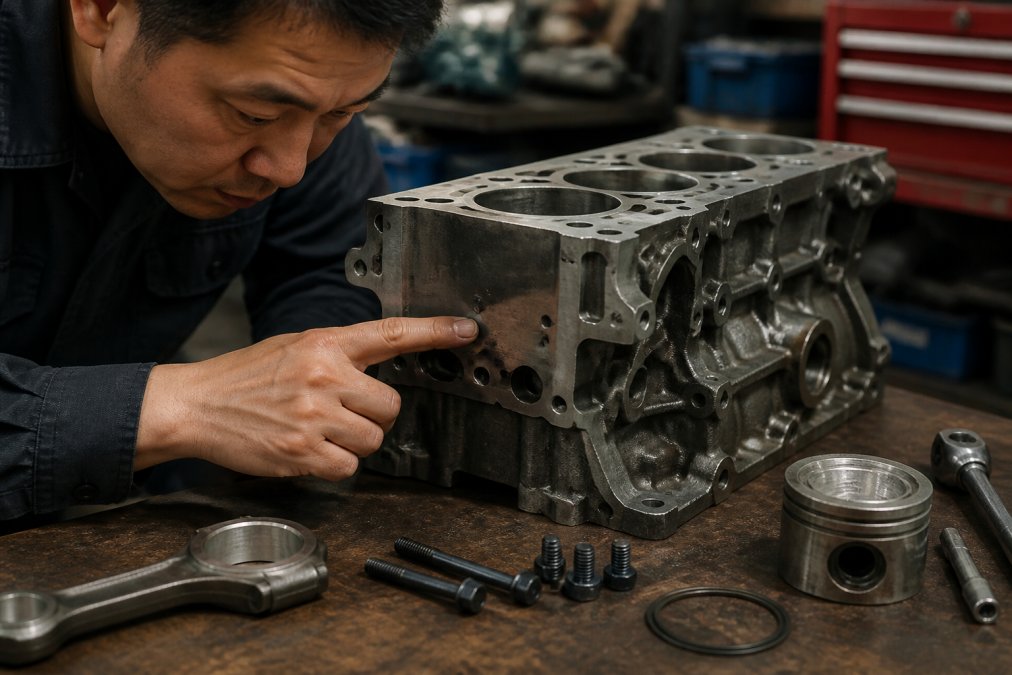
Engine parts are where authenticity matters most, a failing spark plug or timing belt leaves you stranded. Identifying high-quality components starts with understanding what separates legitimate parts from counterfeits.
Verification of Authenticity
Legitimate manufacturers print clear, consistent branding with proper logos, part numbers, and manufacturing dates. Counterfeit parts frequently have blurry printing, misspelled brand names, or inconsistent packaging.
Check the part number against the manufacturer’s official database. NGK spark plugs, for example, have a searchable database where you can verify authenticity. If a seller can’t provide a verifiable part number or the number doesn’t match the product, walk away.
Request documentation from your supplier. Reliable sellers provide certificates of authenticity or batch documentation showing where parts originated. This protects your warranty, if something fails and you can’t prove the part was genuine, manufacturers won’t honour their guarantees.
Buying from unknown marketplaces exposes you to counterfeit components that may fail catastrophically. A fake timing belt might last 5,000 kilometres instead of 100,000, resulting in thousands in engine damage ([peer-reviewed research](https://pmc.ncbi.nlm.nih.gov/articles/PMC11212481/)).
Checking Manufacturer Standards
Legitimate manufacturers meet strict international standards. Look for ISO certification or Japanese Industrial Standards (JIS) on packaging. Cross-reference the product against the manufacturer’s official website to confirm specifications match.
Ask your supplier about sourcing. Vertexark Auto Parts sources directly from manufacturers or authorised distributors, ensuring every component meets original specifications. Suppliers buying from grey-market channels often can’t guarantee parts haven’t been damaged or stored improperly.
Top Aftermarket Parts Brands for Japanese Cars
NGK Spark Plugs
NGK is the global leader in spark plug manufacturing with an unmatched reputation in the Japanese automotive market. They produce spark plugs in multiple grades, standard copper, iridium, and platinum, each designed for different engine types and driving conditions. For most Japanese vehicles, NGK’s standard offerings can be found for around A$7.99 per plug.
What separates NGK from budget alternatives is consistency. Every plug carries the same manufacturing precision. Their iridium plugs deliver superior heat resistance and longer service intervals, important for high-performance builds or older engines prone to fouling.
Compatibility is extensive, and their part numbering system is straightforward. If you’re unsure which plug fits your engine, Vertexark Auto Parts can match the exact part to your vehicle model.
KYB Shock Absorbers
Suspension components affect how your Japanese vehicle handles, brakes, and rides. KYB, a Japanese manufacturer, produces shock absorbers that restore or enhance suspension performance. Their Excel-G twin-tube design suits factory-equivalent replacement, whilst their Gas-A-Just monotubes suit heavier loads and towing.
Quality KYB shocks can be found starting from around A$86.21 per unit. You’re paying for engineering, KYB shocks work with your vehicle’s suspension geometry, spring rates, and weight distribution. A cheap shock might fit the mounting points but won’t deliver the same ride quality or handling precision.
Installation often requires professional fitting to ensure proper alignment and safety. Vertexark Auto Parts can advise whether your specific installation requires professional help.
Denso Automotive Parts
Denso manufactures components for both OEM and aftermarket channels, meaning many of their parts are already in your Japanese vehicle. Their spark plugs, starter motors, fuel injectors, and radiators are engineered to the same standards as factory equipment. For many Japanese vehicles, Denso parts are indistinguishable from OEM components because they often supply the OEM parts themselves.
Denso spark plugs can be found for around A$10.00 per unit, whilst starter motors can reach A$910.00. The advantage is buying from a manufacturer trusted by Japanese vehicle producers for decades. Their quality control is rigorous, and warranty support is straightforward.
Ryco Filters
Ryco, an Australian manufacturer, produces oil, air, fuel, and cabin filters designed specifically for local driving conditions. Their engineering focuses on efficiency, longevity, and flow, the three factors determining how well a filter protects your engine.
Ryco filters can be found starting from around A$7.00 per unit. Australian-specific engineering matters, Ryco designs filters to handle dust, heat, and fuel quality variations across different regions. Their products meet or exceed OE standards, protecting your statutory warranty.
Gates Timing Belts
Timing belts are critical components, if one fails on an interference engine, you’re looking at catastrophic internal damage. Gates produces timing belts that meet or exceed OE specifications. Their belts feature PTFE-infused jackets to reduce friction and tooth shear, plus high-grade HNBR rubber for heat and contamination resistance.
Gates timing belts can be found starting around A$51.95 per unit, though complete kits with tensioners and idler pulleys cost more. You’re buying reliability, Gates belts are engineered to last as long as the original equipment, typically 100,000 to 150,000 kilometres. For interference engines, that reliability is non-negotiable.
Installation is complex and typically requires professional expertise. Vertexark Auto Parts stocks Gates belts for most Japanese models and can advise on whether your vehicle needs professional fitting.
Genuine vs Aftermarket Car Parts Comparison
The decision between genuine OEM parts and quality aftermarket alternatives often comes down to cost, availability, and specific use case.
| Factor | Genuine OEM Parts | Quality Aftermarket |
|---|---|---|
| Cost | Higher, typically 30-50% more | Lower, significant savings |
| Availability | Sometimes slow, especially for older models | Generally faster, wider stock |
| Fitment Guarantee | Exact fit by definition | Exact fit if sourced correctly |
| Warranty | Manufacturer warranty, often limited | Varies; quality brands offer strong warranties |
| Performance | Engineered to original specs | Varies by brand; premium aftermarket matches OEM |
| Resale Impact | Maintains perception of quality | Depends on brand reputation |
Cost and Value Considerations
OEM parts carry dealership supply chain overhead and brand premium. A genuine Toyota spark plug might cost 40% more than an NGK equivalent, even though both are manufactured to identical specifications.
For routine maintenance, filters, spark plugs, brake pads, quality aftermarket parts deliver exceptional value. You’re not paying for dealership markup, and established brands have proven track records. Savings compound quickly over the vehicle’s life.
For complex components like engines or transmissions, the cost differential is steeper. The decision depends on whether you need OEM authenticity for warranty purposes or whether aftermarket alternatives meet your needs.
For most DIY maintenance, reliable aftermarket parts for Japanese cars from established brands deliver 90% of OEM quality at 50-60% of the cost. The exception is warranty-critical situations where OEM parts protect your coverage.
Performance and Longevity
Longevity depends on brand reputation and proper installation. An NGK iridium plug lasts 100,000 kilometres; a cheap alternative might last 20,000. Premium aftermarket components maintain performance across their entire service life, whilst budget alternatives degrade gradually.
For suspension components, the difference is tangible. KYB shocks maintain ride quality and handling precision throughout their service interval. Budget alternatives often feel soft or unstable after 40,000-50,000 kilometres. For long-term ownership, investing in quality aftermarket suspension pays dividends in driving experience and safety.
Performance upgrades like Whiteline and SuperPro suspension components are engineered for Australian roads with proven durability records. Exedy clutches are trusted by performance builders because they deliver consistent friction characteristics across extreme conditions.
Aftermarket Parts Warranty in Australia
Warranties are your safety net when parts fail prematurely. Understanding what’s covered, how long coverage lasts, and what voids warranties protects your investment.
What Warranties Typically Cover
Most quality aftermarket manufacturers cover defects in materials and workmanship. If an NGK spark plug fails due to a manufacturing defect within the warranty period, they’ll replace it. What’s typically not covered is damage from improper installation, contamination, or misuse.
Warranty terms vary by brand and product category. NGK spark plugs typically carry a one-year or 20,000-kilometre warranty. KYB shock absorbers offer longer coverage, often three years or 100,000 kilometres. Ryco filters, as consumables, typically carry limited warranty because their function is to be replaced regularly.
Vertexark Auto Parts provides warranty documentation with every purchase, so you know exactly what’s covered and for how long.
Australian Consumer Guarantees
Beyond manufacturer warranties, Australian consumer law provides additional protections. The Australian Consumer Law guarantees that goods are of acceptable quality, fit for purpose, and safe. If an aftermarket part fails prematurely due to a defect, not misuse, you have legal recourse.
A timing belt that fails at 60,000 kilometres when it should last 120,000 is potentially defective under consumer law. These protections exist regardless of what the manufacturer’s warranty states. When purchasing from Vertexark Auto Parts, you’re protected by both the manufacturer’s warranty and Australian consumer guarantees.
Sourcing Quality Parts: Shipping and Logistics
Getting the right part to your door requires reliable sourcing and logistics. International shipping introduces complexity, customs duties, delivery times, and damage risk all factor into the equation.
Vehicle Model Compatibility Guides
Before ordering, verify compatibility. Japanese vehicles span decades of models, engine variations, and regional specifications. A spark plug that fits a 2005 Honda Civic won’t necessarily fit a 2010 model, even though they’re the same brand and model line.
Most quality suppliers maintain detailed compatibility databases. Enter your vehicle’s year, make, model, and engine size, and the system returns exact parts. Vertexark Auto Parts provides this service, verify fitment before ordering, eliminating the risk of receiving the wrong component.
Always photograph your current part before ordering a replacement. The part number stamped on your existing component is the most reliable way to ensure the aftermarket replacement matches exactly. Don’t rely on year and model alone.
International Shipping and Customs Duties
Many quality aftermarket parts originate from Japan, requiring international shipping. Shipping costs vary based on weight and volume. A set of spark plugs might cost A$5-10 to ship, whilst a complete suspension kit could exceed A$50-100.
Customs duties apply to goods imported into Australia. Most automotive parts attract tariffs that increase landed cost. Reputable suppliers factor these costs transparently into pricing or clearly disclose them at checkout.
Delivery times for international shipments typically range from 10-21 days. If you need parts urgently, domestic stock is preferable. Vertexark Auto Parts maintains Australian inventory for popular components, ensuring faster dispatch than international ordering.
Suspension and Performance Upgrades
Suspension upgrades transform how your Japanese vehicle handles. Whether you’re restoring a worn-out suspension or pursuing track-ready performance, aftermarket options deliver customisation that OEM parts can’t match.
Coilovers and Sway Bars
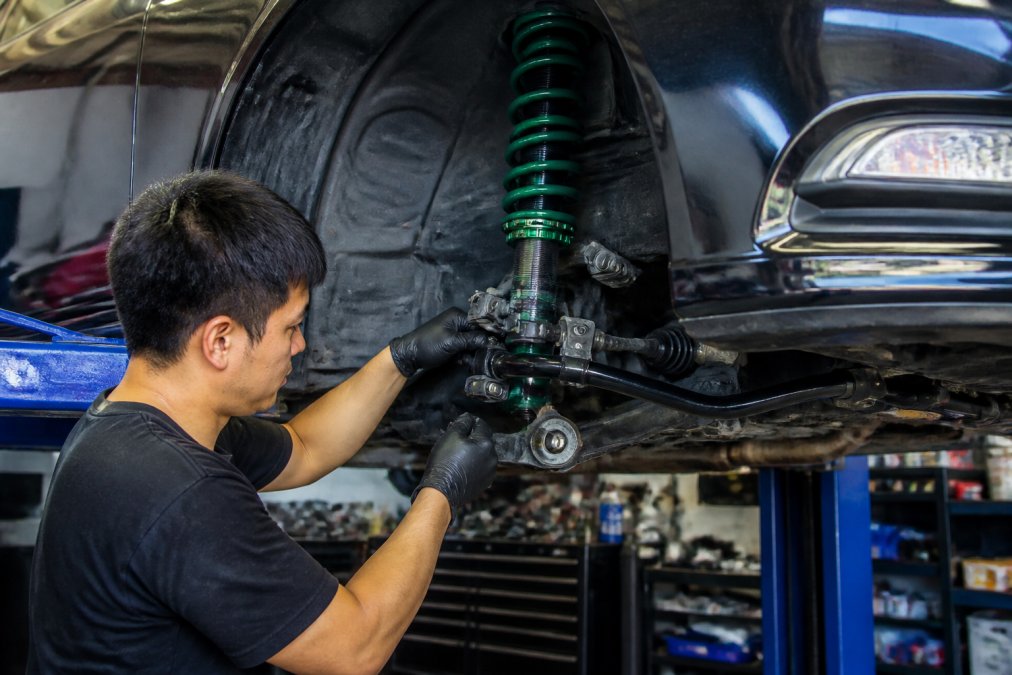
Coilovers replace your vehicle’s factory springs and shock absorbers with a unified system offering adjustable ride height, spring rate, and damping. Quality coilovers from Whiteline allow fine-tuning of suspension geometry for improved cornering grip and steering response.
Sway bars reduce body roll during cornering, improving stability and handling precision. Whiteline sway bars can be found starting around A$38.95 and reaching A$1,275.00 for complete performance kits. A simple sway bar upgrade improves handling noticeably; a complete coilover kit delivers track-ready performance.
Coilover installation requires suspension knowledge and alignment work is essential after fitting. Many owners choose professional installation for suspension work, ensuring safety and proper geometry setup.
Brake and Cooling System Upgrades
Bendix brake pads offer a range from standard replacement compounds to aggressive performance formulations. Upgrading to performance pads improves stopping power and fade resistance, especially important for tracking your vehicle or driving in mountainous terrain.
Denso radiators and thermostats are engineered for efficient heat dissipation. If you’re running engine modifications that increase combustion temperatures, upgrading cooling capacity prevents overheating.
Exedy clutches are essential if you’re increasing engine power. Standard clutches slip under increased torque; performance clutches hold firm through aggressive acceleration. For track-focused builds, racing-grade Exedy clutches deliver the friction characteristics required for extreme conditions.
Conclusion
Choosing reliable aftermarket parts for Japanese cars means balancing cost, authenticity, and performance against your specific vehicle’s needs and driving style. Quality brands like NGK, KYB, Denso, Ryco, Gates, Whiteline, and Exedy have earned their reputation through consistent performance and customer trust.
Vertexark Auto Parts sources quality aftermarket components backed by industry-leading warranties, fast shipping, and guaranteed exact fit for your vehicle model. When you need reliable parts you can trust, shop with a supplier committed to 100% customer satisfaction and expert support every step of the way.
=== FAQ ANSWERS (audit these too, same rules) ===
[1] Q: How do I verify the authenticity of Japanese performance parts?
A: Check manufacturer serial numbers and packaging against official brand websites. Authentic parts carry consistent labelling, proper documentation, and come from authorised distributors. Counterfeit components often have spelling errors, poor print quality, or mismatched serial numbers. Request a certificate of authenticity from your supplier, and cross-reference part numbers with the manufacturer’s database. Reputable retailers like Vertexark Auto Parts provide verified sourcing and can confirm authenticity before dispatch.
[2] Q: What should I look for when buying aftermarket parts for Japanese cars?
A: Prioritise parts that meet or exceed OE specifications, have clear warranty coverage, and come from established manufacturers with track records in Japanese vehicle applications. Verify exact vehicle compatibility by model year and engine type. Check that the supplier offers easy returns and provides technical support. Quality aftermarket parts from brands like NGK, KYB, and Denso deliver reliability comparable to OEM components at lower cost, particularly for routine maintenance items like filters, spark plugs, and brake pads.
[3] Q: How do Australian consumer guarantees apply to aftermarket car parts?
A: Under the Australian Consumer Law, aftermarket parts must be of acceptable quality, fit for purpose, and as described (accc.gov.au). Retailers must provide remedies including repair, replacement, or refund if parts fail within a reasonable timeframe. Goods purchased must match what was advertised. Most reputable aftermarket suppliers offer warranties beyond legal minimums. Always keep purchase receipts and documentation. If a part fails prematurely, you have the right to claim under consumer guarantees regardless of the manufacturer’s stated warranty period.
[4] Q: Are aftermarket parts as reliable as genuine OEM parts?
A: Quality aftermarket parts from established manufacturers are highly reliable and often indistinguishable from OEM components in performance and durability. Many aftermarket parts are manufactured to the same specifications or by the same suppliers as OEM parts. The key difference is price and availability. Reputable brands like Ryco Filters, Exedy Clutches, and Whiteline suspension components have proven track records with Japanese vehicles. Reliability depends on selecting parts from trusted suppliers and ensuring correct installation rather than choosing aftermarket or OEM alone.
Frequently Asked Questions
How do I verify the authenticity of Japanese performance parts?
Check manufacturer serial numbers and packaging against official brand websites. Authentic parts carry consistent labelling, proper documentation, and come from authorised distributors. Counterfeit components often have spelling errors, poor print quality, or mismatched serial numbers. Request a certificate of authenticity from your supplier, and cross-reference part numbers with the manufacturer's database. Reputable retailers like Vertexark Auto Parts provide verified sourcing and can confirm authenticity before dispatch.
What should I look for when buying aftermarket parts for Japanese cars?
Prioritise parts that meet or exceed OE specifications, have clear warranty coverage, and come from established manufacturers with track records in Japanese vehicle applications. Verify exact vehicle compatibility by model year and engine type. Check that the supplier offers easy returns and provides technical support. Quality aftermarket parts from brands like NGK, KYB, and Denso deliver reliability comparable to OEM components at lower cost, particularly for routine maintenance items like filters, spark plugs, and brake pads.
How do Australian consumer guarantees apply to aftermarket car parts?
Under the Australian Consumer Law, aftermarket parts must be of acceptable quality, fit for purpose, and as described. Retailers must provide remedies including repair, replacement, or refund if parts fail within a reasonable timeframe. Goods purchased must match what was advertised. Most reputable aftermarket suppliers offer warranties beyond legal minimums. Always keep purchase receipts and documentation. If a part fails prematurely, you have the right to claim under consumer guarantees regardless of the manufacturer's stated warranty period.
Are aftermarket parts as reliable as genuine OEM parts?
Quality aftermarket parts from established manufacturers are highly reliable and often indistinguishable from OEM components in performance and durability. Many aftermarket parts are manufactured to the same specifications or by the same suppliers as OEM parts. The key difference is price and availability. Reputable brands like Ryco Filters, Exedy Clutches, and Whiteline suspension components have proven track records with Japanese vehicles. Reliability depends on selecting parts from trusted suppliers and ensuring correct installation rather than choosing aftermarket or OEM alone.
This article was written using GrandRanker