



Tips for Buying Car Parts Online: A 2026 Guide
Table of Contents
- Verify Your Vehicle Specifications Before You Buy
- How to Check Car Part Compatibility with Your Vehicle
- Genuine vs Aftermarket Car Parts: What You Need to Know
- Spot Counterfeits and Verify Part Authenticity
- Australian Consumer Law Auto Parts Warranty Coverage
- Understand Shipping, Delivery, and Damage Inspection
- Tips for Buying Car Parts Online Safely and Securely
- Conclusion
Last Updated: August 29, 2026
Verify Your Vehicle Specifications Before You Buy
Getting the right part starts with knowing exactly what you’re looking for. You need three critical pieces of information before you search: your vehicle identification number, your make and model, and your engine code. Without these, you’re essentially shopping blind.
Locating and using your VIN
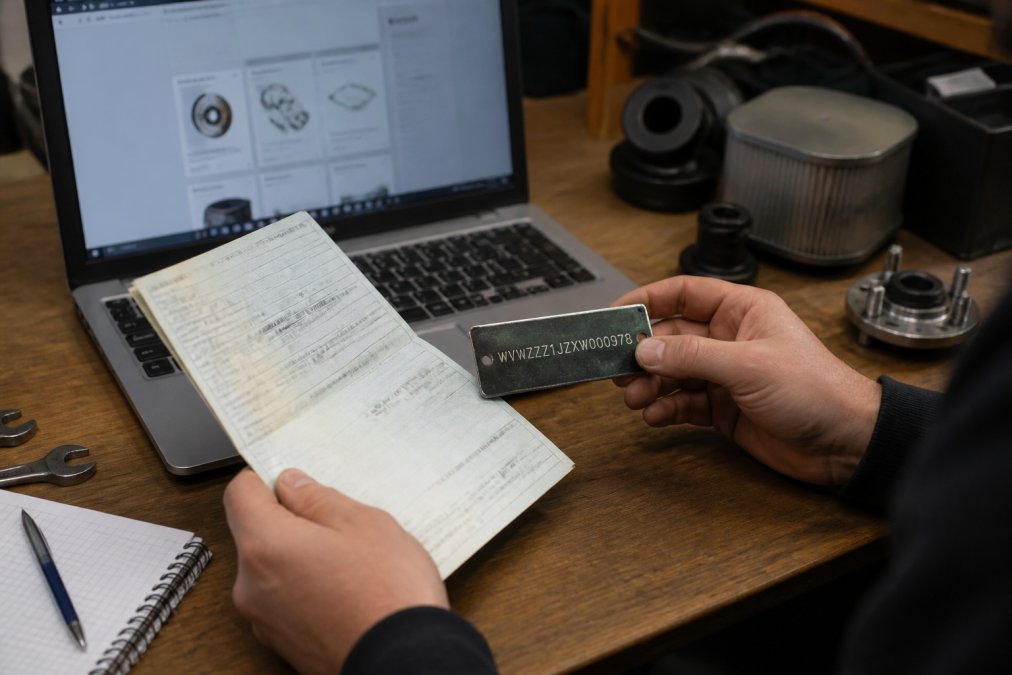
Your vehicle identification number is a 17-character code that uniquely identifies your car. You’ll find it on the driver’s side of the dashboard, visible through the windscreen, or on your vehicle registration papers. When buying car parts online, this number is your anchor point.
Most online retailers have a VIN decoder tool built into their search interface. Enter your VIN, and the system automatically populates your exact specifications. However, some older vehicles or imports may not decode perfectly in all systems, so you should also record your make, model, and year manually as a backup.
If you’re buying for an older Japanese or domestic model, photograph your VIN and keep it in your phone. Many online retailers’ systems work faster when you can paste the VIN directly into their search rather than typing it character by character.
Recording your make, model, year, and engine code
Write down your vehicle’s exact make, model, and year. "Honda Civic" isn’t specific enough; you need "2005 Honda Civic" at minimum. Better still, include the body series: "2005 Honda Civic ES" or "2005 Honda Civic Si."
Your engine code is equally important. Open your bonnet and look for a label on the engine block or head. It typically shows a code like "K20Z2" or "D16Y8." Two seemingly identical Civics from the same year might have different engines, and ordering a part designed for the wrong engine is a costly mistake. If you can’t locate the engine code on the engine itself, check your vehicle registration or service history.
How to Check Car Part Compatibility with Your Vehicle
Compatibility is where online buying gets tricky. A part that fits a 2005 Honda Civic might not fit a 2006 model. Even within the same model year, different trim levels sometimes use different components.
Using online search filters and cross-reference tools
Every reputable online parts retailer provides search filters based on your vehicle specifications. After you enter your VIN or manually select your make, model, and year, the system should display only parts that fit your vehicle.
However, filters aren’t foolproof. Always cross-reference the part number listed on the retailer’s page with your vehicle manual or a parts cross-reference database. A part number tells you exactly which component you’re getting, and matching it to your manual confirms it’s correct.
Many retailers also display fitment guarantees. If the guarantee isn’t displayed, contact the retailer’s customer support before ordering. Ask directly: "Will this part fit my 2005 Honda Civic with the K20Z2 engine?" A trustworthy retailer will give you a clear yes or no.
The part number is your confirmation tool. Match it against your vehicle manual, and you’ve eliminated almost all compatibility risk.
Understanding body series and transmission type
Body series refers to the generation and trim level of your vehicle. A 2005 Honda Civic comes in multiple body series: the ES, the EX, the Si. Each might use slightly different components, particularly for interior and exterior accessories.
Transmission type is critical for drivetrain components. Your vehicle either has a manual transmission or an automatic. Some parts, like engine mounts, transmission fluid, or shift cables, are transmission-specific. You’ll find your transmission type on your registration papers or in your vehicle manual. When you’re searching for drivetrain parts online, always filter by transmission type first.
Genuine vs Aftermarket Car Parts: What You Need to Know
This decision shapes everything about your repair: cost, longevity, warranty coverage, and performance. Genuine parts come directly from the manufacturer. Aftermarket parts are produced by third-party manufacturers. Neither is inherently better; the choice depends on your vehicle, your budget, and your priorities.
OEM components versus aftermarket alternatives
OEM stands for Original Equipment Manufacturer. These are parts made by the company that built your vehicle or by a supplier authorised by that company. They’re engineered to exact specifications and carry the manufacturer’s warranty. For critical components like engine parts, transmission elements, or safety systems, OEM parts are the conservative choice.
Aftermarket parts are made by independent manufacturers and are often significantly cheaper than OEM equivalents, sometimes 30-50% less. Quality varies widely. The key to evaluating an aftermarket part is understanding the manufacturer’s reputation and the part’s specifications. A well-known aftermarket brand with strong customer reviews is often a safer bet than an unknown budget alternative.
Cheap aftermarket parts that fail within months cost more in the long run when you factor in labour, downtime, and frustration. A slightly more expensive part from a reputable manufacturer often saves money over time.
Quality and performance considerations
Quality isn’t always visible in a product photo. Look for specifications that indicate manufacturing standards. Parts tested to international standards (ISO certifications, for example) have undergone rigorous quality checks.
For performance-oriented upgrades, aftermarket parts often outperform OEM equivalents because they’re designed specifically for enhancement. However, performance parts sometimes compromise reliability or longevity in exchange for gains. When you’re shopping for performance parts online, read customer reviews from people who’ve used them long-term.
Spot Counterfeits and Verify Part Authenticity
Counterfeit automotive parts are a real problem in online retail. A fake part might look identical to the genuine article but fail within weeks.
Verify authenticity by checking the part’s packaging, markings, and documentation. Genuine parts come in branded packaging with clear labelling, part numbers, and manufacturing information. Counterfeit parts often have spelling errors, blurry printing, or inconsistent branding.
Request the part’s serial number or batch code from the retailer before purchasing. Legitimate manufacturers track their products by batch, and you can verify a batch code against the manufacturer’s database. Check the retailer’s sourcing. Reputable online retailers source directly from manufacturers or authorised distributors and can provide documentation proving the part’s origin.
When your part arrives, inspect the packaging and markings immediately. Compare them to images of genuine parts from the manufacturer’s website. If something looks off, different fonts, unusual colours, or missing holograms, contact the retailer immediately and request a replacement or refund. For more tips on avoiding counterfeit items online.
Australian Consumer Law Auto Parts Warranty Coverage
In Australia, consumer protection law requires retailers to provide fit-for-purpose guarantees on goods sold, including automotive parts. Understanding what’s covered under law and what’s covered under the seller’s warranty prevents disputes later.
What warranty coverage actually includes
Australian Consumer Law requires that goods must be of acceptable quality, fit for purpose, and match any description provided (Australian Consumer Law). For automotive parts, this means the part must work as described and be suitable for your vehicle when properly installed.
Beyond the legal minimum, many online retailers offer extended warranties. These warranties typically cover manufacturing defects for a specified period, often 12 months or longer. A good warranty covers part failure due to defects in materials or workmanship, but usually excludes damage from improper installation, abuse, or normal wear.
When you’re buying car parts online, check the warranty terms before purchasing. The warranty should be clearly stated on the product page, and the retailer should provide documentation with your order.
Budget-conscious vehicle owners who want protection against defective parts without paying premium OEM prices should prioritise retailers offering extended warranties on aftermarket components.
Return policies and core charge processes
A core charge is a deposit you pay when you purchase certain components, typically engines, transmissions, alternators, or starters. You get the deposit back when you return the old part.
When ordering parts with core charges online, understand the retailer’s process. You’ll pay the core charge upfront. After installation, you remove the old part, package it, and return it to the retailer. Once the retailer receives and inspects the old part, they refund the core charge.
The inspection process matters. The retailer will check that the old part is genuine, not damaged beyond repair, and actually the component they’re expecting. Ask the retailer about their inspection standards before ordering.
Return policies should allow at least 30 days for returns. If a part doesn’t fit or doesn’t work, you should be able to return it for a refund or exchange. Check whether the retailer covers return shipping or if you pay for it.
Understand Shipping, Delivery, and Damage Inspection
Shipping is where online buying becomes real. A part ordered online is worthless if it arrives damaged or late.
Shipping logistics and order tracking
Reputable online retailers provide tracking information as soon as your order ships. You should receive a tracking number via email that allows you to monitor your package’s progress.
Shipping times vary based on your location and the retailer’s warehouse. Urban areas typically receive deliveries within 2-5 business days (ACCC survey response summary on Australia Post delivery times). Regional and remote areas may take 7-10 business days or longer. Some retailers offer express shipping for an additional fee, typically guaranteeing delivery within 1-2 business days. International shipping may take 3-4 weeks and incur customs duties or import taxes.
Inspecting parts on arrival and damage protocols
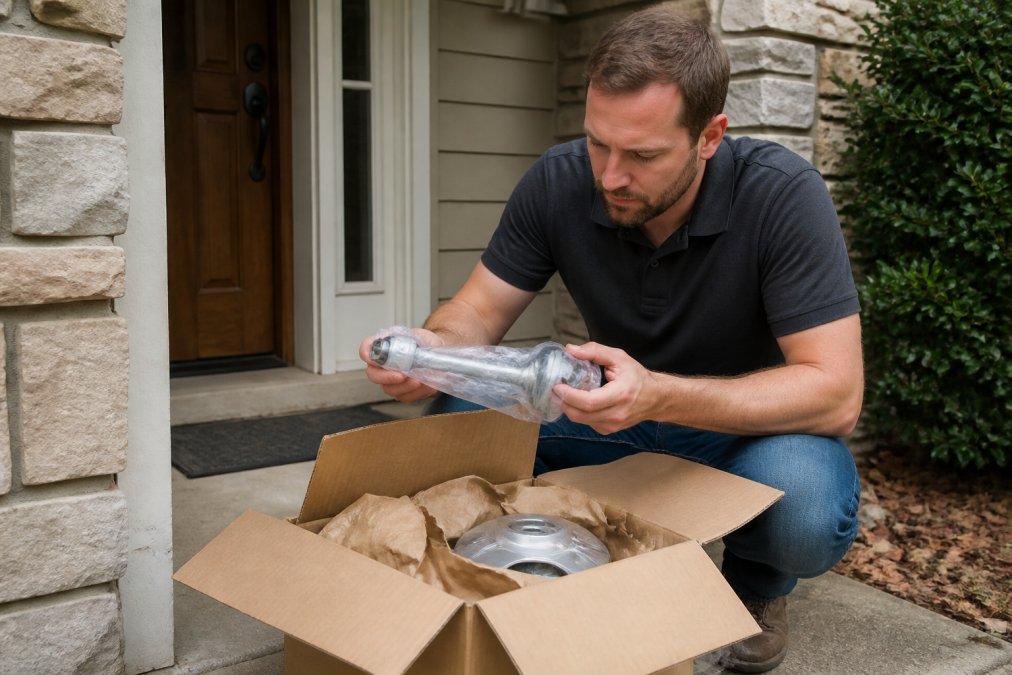
When your package arrives, inspect it immediately. Before opening the box, check for obvious damage: crushed corners, dents, or water damage. If the external packaging is severely damaged, photograph it and note the damage on the delivery signature.
Open the package carefully and inspect the part itself. Check for shipping damage: bent components, cracked housings, or loose internal parts. Compare the part number on the component to the part number on your order confirmation. Verify that the part matches your vehicle specifications.
If you find damage, contact the retailer immediately. Most retailers will replace a damaged part or issue a refund without requiring you to return the damaged component. However, you need to report damage quickly, typically within 48 hours of delivery. Photograph the damage clearly and include the photos in your communication with the retailer.
Tips for Buying Car Parts Online Safely and Securely
Online transactions involve sharing personal and financial information. Protecting yourself from fraud and scams is essential.
Secure payment methods and scam prevention
Use secure payment methods that offer buyer protection. Credit cards and PayPal provide dispute resolution if something goes wrong. Debit cards and bank transfers offer less protection, so avoid these for unfamiliar retailers.
Check that the retailer’s website uses HTTPS encryption. Look for the padlock icon in your browser’s address bar. Never enter payment information on a website without HTTPS.
Verify the retailer’s legitimacy before making a purchase. Check their business registration, physical address, and contact information. Look for customer reviews on independent review platforms. Be wary of unusually low prices. If a part costs significantly less than competitors, question why.
Never wire money to an unfamiliar retailer or pay via untraceable methods like cryptocurrency. These payment methods offer no buyer protection if the retailer disappears with your money.
Choosing a trusted online retailer with customer support
A trusted retailer makes themselves accessible. They should have multiple contact methods: phone, email, and live chat. When you contact them with a question before purchasing, note how quickly and helpfully they respond.
Check whether the retailer employs real people for customer support or relies entirely on automated systems. A retailer that offers phone support staffed by knowledgeable people is more reliable than one with only chatbots or contact forms.
Look for retailers that provide detailed product information: full specifications, compatibility charts, installation instructions, and clear photos. Retailers that invest in detailed product pages are usually more professional and reliable.
At Vertexark Auto Parts, we’ve built our reputation on genuine customer support and exact-fit guarantees. Our team answers questions before you buy, helping you identify the right part for your vehicle. We stand behind our parts with industry-leading warranties and easy returns. When you’re buying car parts online, you deserve a retailer that treats you as more than a transaction.
Buying car parts online doesn’t have to be risky. The process becomes straightforward when you verify your vehicle specifications, check compatibility carefully, understand the difference between genuine and aftermarket options, and choose a retailer that prioritises your satisfaction. Start with your VIN, confirm your engine code, and use compatibility filters before ordering. Inspect your parts on arrival, understand your warranty coverage, and know the return process. With these practices in place, you’ll find the right parts, install them with confidence, and keep your vehicle running reliably. Shop with Vertexark Auto Parts and experience the difference that guaranteed exact fit, fast shipping, and genuine customer support make.
Frequently Asked Questions
How do I know if a car part will fit my specific vehicle model?
Start with your vehicle identification number (VIN), which contains your make, model, year, engine code, and transmission type. Use this information with online search filters on your chosen retailer's website to cross-reference parts. Most reputable online sellers offer fitment guarantees and will confirm compatibility before you purchase. If unsure, contact customer support with your VIN, they can verify the exact part you need.
What's the difference between genuine and aftermarket car parts?
Genuine (OEM) parts are made by your vehicle's manufacturer and typically cost more. Aftermarket parts are made by third-party suppliers and usually cost less while meeting quality standards. Both can be reliable; the choice depends on your budget and performance needs. Quality aftermarket parts often perform as well as OEM components, but always check warranty coverage and customer reviews before buying.
What does Australian Consumer Law say about auto parts warranty?
Australian Consumer Law requires goods to be of acceptable quality, fit for purpose, and as described. For car parts, this means they must work as intended for a reasonable time. Most retailers offer additional warranty periods beyond statutory rights. Always check the warranty terms before purchasing, understand what's covered, the duration, and any exclusions. Keep your receipt and documentation for warranty claims.
How can I verify a car part is genuine and not counterfeit?
Check for proper packaging, clear branding, and part numbers that match your vehicle manual. Buy from established online retailers with strong customer reviews and secure payment systems. Counterfeit parts often have poor packaging, spelling errors, or mismatched part numbers. If a price seems unusually low, it's a red flag. Request proof of authenticity from the seller if you're uncertain, and always inspect the part immediately upon delivery.
This article was written using GrandRanker