



Premium Aftermarket Engine Components: Why They Matter
Table of Contents
- What Makes Premium Aftermarket Engine Components Different
- Quality Standards and Durability Testing for Aftermarket Parts
- How to Identify Quality Aftermarket Engine Components
- Fitment Accuracy and Compatibility With Your Vehicle
- Warranty Coverage and Aftermarket Parts Under Australian Consumer Law
- Febest Replacement Parts for Enthusiasts and Performance Upgrades
- Cost-Effectiveness: Premium Aftermarket vs. OEM and Budget Options
- Frequently Asked Questions
Last Updated: September 1, 2026
What Makes Premium Aftermarket Engine Components Different
Premium aftermarket engine components are engineered replacements manufactured to exacting standards that often match or exceed original equipment manufacturer (OEM) specifications. Unlike budget aftermarket parts or generic replacements, premium options combine rigorous durability testing, advanced manufacturing processes, and comprehensive warranty coverage designed for long-term reliability.
At Vertexark Auto Parts, we understand that choosing the right engine components means balancing cost-effectiveness with performance and peace of mind. The distinction between premium aftermarket and standard aftermarket lies in quality certification, supply chain transparency, and the manufacturer’s commitment to component reliability. Premium parts undergo accelerated durability testing to simulate years of operation, ensuring they perform consistently under real-world conditions.
The value proposition of premium aftermarket engine components extends beyond initial purchase price. These components typically feature superior material quality, tighter manufacturing tolerances, and factory-grade engineering that translates to longer replacement cycles and fewer unexpected failures. For DIY enthusiasts and performance-oriented drivers, this means fewer trips to the workshop and more time enjoying your vehicle.
When you select premium aftermarket components, you’re investing in mechanical integrity backed by technical specifications that have been validated through rigorous testing protocols. This approach differs fundamentally from budget alternatives, which may sacrifice durability testing or use lower-grade materials to achieve competitive pricing.
Premium aftermarket parts are often manufactured by established suppliers who also produce components for OEM applications. This dual-sourcing approach means you’re getting technology proven on factory production lines, adapted for the aftermarket with enhanced specifications.
Quality Standards and Durability Testing for Aftermarket Parts
Premium aftermarket engine components must meet established industry standards that define acceptable performance thresholds. These standards ensure that components maintain mechanical integrity across extended operating cycles and diverse environmental conditions. Quality certification from recognised testing bodies provides third-party verification that a component has passed rigorous evaluation protocols.
Durability testing for premium aftermarket parts typically includes thermal cycling, pressure stress testing, and material composition analysis (iso.org). Thermal cycling simulates seasonal temperature variations and operating heat exposure, verifying that components maintain dimensional stability and material properties across temperature extremes. Pressure testing validates that components withstand the dynamic forces encountered during engine operation without deformation or failure.
Material quality assessment examines chemical composition, hardness, and structural integrity. Premium manufacturers specify materials that resist corrosion, maintain strength at elevated temperatures, and perform consistently across thousands of operating hours. This contrasts sharply with budget aftermarket components, which may use lower-grade materials that degrade faster or exhibit unpredictable failure modes.
Many premium aftermarket suppliers maintain ISO certification and participate in industry standardisation bodies that establish technical specifications for component manufacturing. These certifications require documented quality control processes, traceability throughout the supply chain, and compliance with defined performance metrics. The certification process itself acts as a quality filter, eliminating manufacturers who cannot demonstrate consistent adherence to engineering standards.
Durability testing separates premium aftermarket components from budget alternatives. Premium parts are validated to perform reliably across extended operating cycles, while budget options may lack this verification entirely.
How to Identify Quality Aftermarket Engine Components
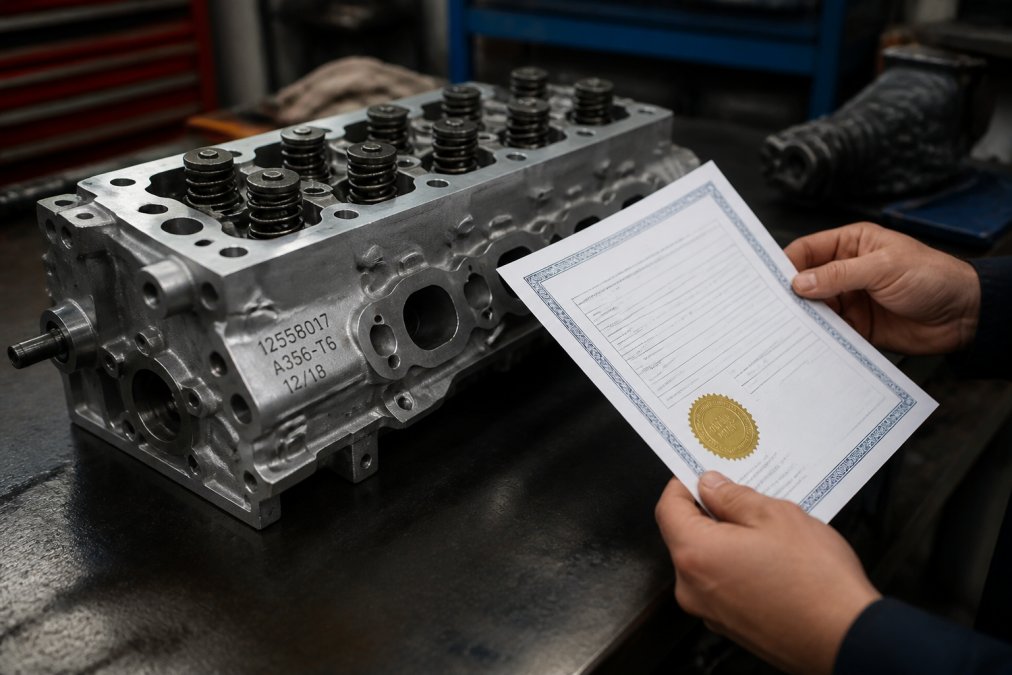
Identifying quality aftermarket engine components requires examining several key indicators that signal manufacturing rigour and technical credibility. Start by verifying that the component displays clear part number markings and manufacturer identification. Legitimate premium components include permanent markings that allow you to cross-reference the part against technical specifications and confirm authenticity.
Examine packaging and documentation carefully. Premium aftermarket components arrive in professional packaging with printed technical specifications, installation instructions, and warranty information. The documentation should include part number cross-referencing that allows you to verify fitment accuracy for your specific vehicle model. Counterfeit or substandard components often feature poor-quality printing, vague specifications, or missing installation guidance.
Check for quality certification symbols on the component or packaging. Legitimate premium aftermarket parts display certification marks from recognised testing bodies. These marks indicate that the component has undergone formal evaluation and meets defined performance standards. Absence of certification marks or unclear certification claims suggest the component may not have undergone rigorous testing.
Verify the supplier’s sourcing transparency. Reputable premium aftermarket suppliers document their manufacturing relationships and can trace components back through the supply chain. Suppliers who cannot provide this traceability lack credibility.
Research the manufacturer’s reputation within automotive communities and technical forums. Premium aftermarket manufacturers have established track records of component reliability and customer satisfaction. Established suppliers receive consistent positive feedback regarding long-term performance and warranty support, while unknown manufacturers or those with poor reviews should raise concerns about component quality.
Fitment Accuracy and Compatibility With Your Vehicle
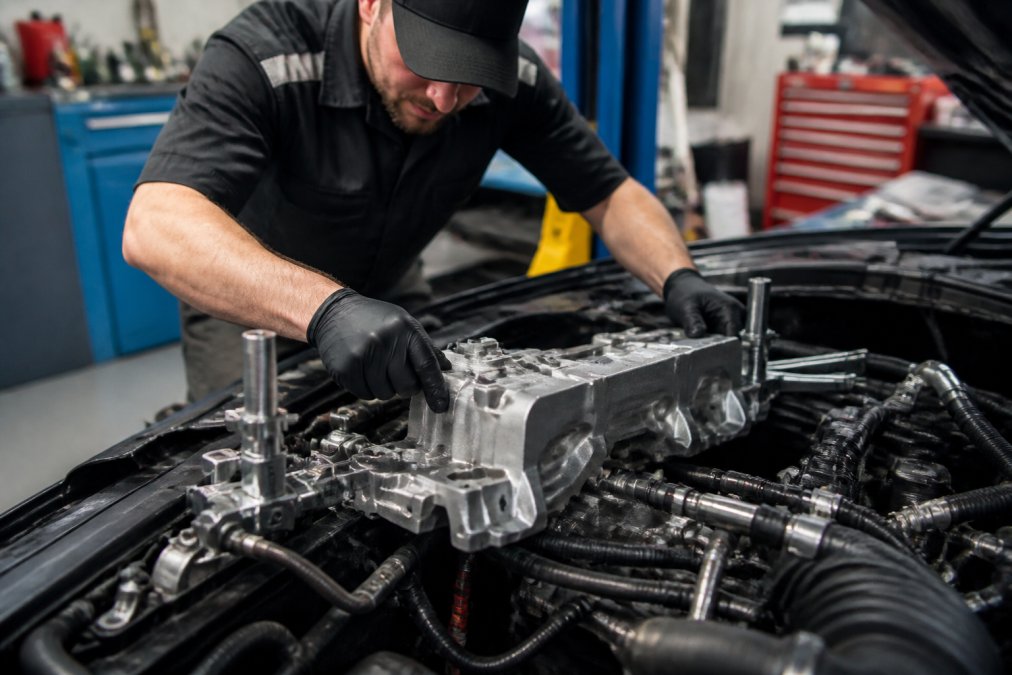
Fitment accuracy separates premium aftermarket components from budget alternatives that may require modification or result in poor performance. Premium aftermarket manufacturers invest heavily in part number cross-referencing and compatibility verification to ensure components fit correctly across different vehicle model years and engine variations.
The challenge with aftermarket components lies in vehicle engineering diversity. Even within a single model line, manufacturers introduced subtle variations across production years that affect component fitment. A component designed for a 2005 model may not fit a 2006 variant without modification. Premium aftermarket suppliers maintain detailed compatibility databases that account for these variations, providing precise fitment information for each specific application.
Compatibility verification begins with confirming your vehicle’s exact engine specifications. Document your vehicle identification number (VIN), engine displacement, fuel system type, and any engine modifications. Premium suppliers like Vertexark Auto Parts cross-reference this information against technical specifications to confirm component compatibility before you purchase. This approach eliminates the frustration of receiving incompatible parts or discovering fitment issues after installation.
Pay attention to mounting interfaces and fixture points. Premium aftermarket components maintain precise dimensional accuracy at mounting surfaces, ensuring proper alignment and secure installation. Budget alternatives sometimes feature tolerances that are too loose, resulting in vibration, misalignment, or premature wear. Precise fitment means the component integrates seamlessly with existing engine architecture without requiring modification or adjustment.
Request detailed fitment confirmation before purchasing. Legitimate premium suppliers provide written confirmation that a specific component is compatible with your vehicle model, engine type, and year. This documentation protects you by creating a record of fitment verification and establishes clear expectations for component performance.
Ordering from suppliers without strong fitment verification systems frequently results in incompatible parts and costly return processes. Always confirm fitment compatibility with detailed technical documentation before completing your purchase.
Warranty Coverage and Aftermarket Parts Under Australian Consumer Law
Understanding warranty coverage for aftermarket engine components requires familiarity with Australian Consumer Law protections and how they apply to replacement parts. Under the Australian Consumer Law, consumers have statutory rights regarding goods that fail to meet acceptable quality standards, regardless of whether the product is OEM or aftermarket (legislation.gov.au).
Premium aftermarket suppliers typically offer extended warranty coverage that exceeds minimum statutory requirements. These warranties protect against manufacturing defects, material failure, and premature wear caused by component defects rather than improper installation or maintenance. Warranty terms vary significantly between suppliers, making it essential to understand exactly what coverage applies to your specific purchase.
Acceptable quality under Australian Consumer Law requires that goods are safe, durable, and fit for purpose (legislation.gov.au). For engine components, this means the part must function reliably for a reasonable period under normal operating conditions. If a component fails prematurely due to manufacturing defects or material failure, you have recourse under consumer protection legislation regardless of the supplier’s stated warranty terms.
The key distinction between warranty coverage and statutory consumer protection is that statutory rights cannot be excluded or limited. If a component fails within a reasonable timeframe due to defects, you’re entitled to repair, replacement, or refund under consumer law, even if the supplier’s warranty has expired. Premium suppliers often highlight this protection as part of their value proposition, recognising that customers benefit from both extended warranties and underlying statutory protections.
When evaluating warranty terms, examine coverage exclusions carefully. Most warranties exclude damage caused by improper installation, maintenance neglect, or operating the component beyond designed specifications. Premium aftermarket warranties typically provide clear, transparent exclusion terms that don’t hide behind vague language. If warranty exclusions are unclear or appear designed to avoid legitimate claims, that’s a red flag regarding the supplier’s commitment to customer protection.
Return and warranty claim processes vary significantly between suppliers. When selecting a premium aftermarket supplier, evaluate their stated return policy and warranty claim procedures before purchasing. Suppliers with transparent, customer-friendly processes demonstrate commitment to standing behind their products.
Febest Replacement Parts for Enthusiasts and Performance Upgrades
Febest has established a reputation within the aftermarket automotive community for engineering components that balance performance enhancement with reliability. For enthusiasts seeking performance upgrades rather than simple replacements, Febest components offer technical specifications designed to improve engine efficiency, response characteristics, and overall performance metrics.
Performance-oriented aftermarket components differ from standard replacements in that they’re engineered to deliver measurable improvements in specific performance characteristics. Febest components in the premium category feature enhanced material specifications, tighter manufacturing tolerances, and engineering optimisation designed to improve throttle response, reduce parasitic losses, and enhance engine longevity under demanding operating conditions.
The distinction between performance upgrades and standard replacements matters for enthusiasts planning vehicle modifications. Standard replacements restore original performance characteristics when original components fail. Performance upgrades intentionally modify engine characteristics to deliver enhanced responsiveness, efficiency, or durability. Febest’s premium component range addresses both categories, allowing enthusiasts to choose between faithful OEM-equivalent replacements or upgraded components that improve baseline performance.
Febest components undergo validation testing that simulates both standard operating conditions and performance-upgrade scenarios. This dual-validation approach ensures components perform reliably whether you’re seeking a direct OEM replacement or planning performance modifications. For DIY enthusiasts performing their own installations, this means you can confidently select Febest components knowing they’ve been engineered and tested for your specific application.
When evaluating Febest components for performance upgrades, examine the technical specifications that define how the component differs from OEM equivalents. Enhanced material specifications, improved heat dissipation, or optimised internal geometry are common differentiators that translate to measurable performance improvements. Reputable premium suppliers like Febest document these technical differences clearly, allowing informed comparison between standard and performance-upgrade options.
Cost-Effectiveness: Premium Aftermarket vs. OEM and Budget Options
Understanding the cost-effectiveness equation requires looking beyond initial purchase price to encompass total cost of ownership across the component’s service life. Premium aftermarket components typically occupy the middle ground between budget alternatives and OEM parts, offering superior value through better durability and reliability than budget options while costing significantly less than OEM equivalents.
Budget aftermarket components minimise initial cost by reducing manufacturing rigour, material specifications, or durability testing. This approach appeals to cost-conscious buyers but often results in higher long-term costs through premature failure, warranty claims, and repeat replacements. A component that fails after 18 months forces another replacement cycle, multiplying total expenditure across the component’s expected service life.
OEM components command premium pricing because manufacturers bundle component cost with brand reputation, comprehensive warranty support, and guaranteed compatibility. For many vehicle owners, OEM pricing justifies the expense through predictable reliability and dealership service integration. However, OEM components often cost significantly more than premium aftermarket equivalents despite offering comparable performance and durability.
Premium aftermarket components balance cost efficiency with reliability through optimised manufacturing processes and selective material specification. Rather than matching every aspect of OEM production, premium aftermarket manufacturers focus investment on the factors that most significantly impact reliability and performance. This targeted approach delivers component quality comparable to OEM parts at substantially lower cost.
The value proposition becomes clearer when you examine replacement cycle frequency. A premium aftermarket component lasting 80,000 kilometres costs less per kilometre than a budget alternative that fails at 40,000 kilometres, even if the budget component’s initial purchase price is lower. Over a vehicle’s 200,000-kilometre service life, this difference compounds significantly.
Consider also the indirect costs of component failure. A failed component during a long journey creates safety concerns, inconvenience, and potential damage to surrounding engine components. Premium components reduce failure probability, protecting you from these indirect costs. For enthusiasts performing their own maintenance, this reliability translates to more predictable workshop schedules and fewer emergency repairs.
| Component Category | Initial Cost Range | Expected Lifespan | Cost Per Kilometre | Best For |
|---|---|---|---|---|
| Budget Aftermarket | Lower | 40,000-60,000 km | Higher | Budget-conscious buyers accepting higher replacement frequency |
| Premium Aftermarket | Moderate | 80,000-120,000 km | Lower | Value-conscious buyers prioritising reliability and durability |
| OEM | Higher | 100,000-150,000 km | Highest | Buyers prioritising brand reputation and dealership integration |
Choosing premium aftermarket engine components reflects a commitment to vehicle reliability and value optimisation. At Vertexark Auto Parts, we’ve built our reputation on delivering components that balance cost-effectiveness with the durability and performance that serious enthusiasts demand. Our guaranteed exact fit, industry-leading warranty, and fast shipping mean you can confidently upgrade your vehicle knowing each component has been selected for quality and validated for your specific application. Shop now and experience the difference that premium components make in your vehicle’s performance and longevity.
Frequently Asked Questions
Q: What’s the difference between premium aftermarket engine components and standard aftermarket parts?
A: Premium aftermarket engine components undergo rigorous durability testing, meet stricter quality certifications, and use superior materials compared to standard options. They’re engineered to match or exceed OEM specifications for fitment accuracy and long-term reliability. Standard aftermarket parts may cost less but often lack the same level of quality assurance, testing protocols, and component reliability that premium options provide.
Q: How do I identify quality aftermarket engine components when shopping online?
A: Look for parts that display industry certification standards, clear part number cross-referencing to your vehicle model, and detailed technical specifications. Check whether the supplier provides warranty coverage, offers exact-fit guarantees, and includes after-sales support. Reputable retailers list material quality information, durability testing results, and customer reviews that verify real-world performance and installation success.
Q: Are premium aftermarket engine components covered under Australian Consumer Law warranty?
A: Yes, aftermarket parts and Australian Consumer Law warranty protections apply together. Retailers must provide goods that are fit for purpose and of acceptable quality under the Australian Consumer Law. Premium aftermarket components typically come with extended manufacturer warranties beyond statutory requirements. Always verify warranty terms with your retailer, coverage details vary, and some exclusions may apply depending on installation method and use conditions.
Q: Will upgrading to premium aftermarket components affect my vehicle’s warranty?
A: Upgrading to premium aftermarket engine components doesn’t automatically void your vehicle’s warranty, but the outcome depends on the component type and your vehicle manufacturer’s policy. Safety-critical components may have stricter implications. Many manufacturers honour warranties for non-safety components if they’re installed correctly and don’t cause unrelated damage. Document your installation process and retain warranty documentation from your parts supplier to protect your coverage.
This article was written using GrandRanker